|
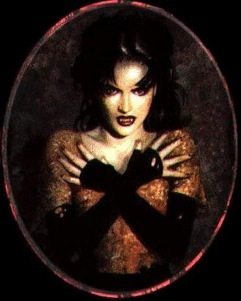
In certain areas of rural Louisiana, some plantations had the exterior keyholes turned upside down to prevent entry of the "undead". Unhappy spirits of the dead were believed to bring disease into households. For many years, yellow fever epidemics were blamed on such "evil spirits". It is documented in our history books that early settlers in New Orleans would fire cannons into the air to repel these spirits. Plagues, as well as tuberculosis, in Europe were often blamed on vampirism. Tuberculosis patients often coughed up blood leading doctors in the Middle Ages to believe that they had been ingesting blood. Thus, came the belief that the disease was the product of a vampire bite. The word Nosferatu literally means "plague-carrier". Early cemeteries in Louisiana were often placed far from towns, many times at a cross roads, to discourage the spirits from finding their way home. Often these tactics were called "confusing the spirit".
In many cultures, Vampirism is believed to be nothing more than aberrant behavior resulting from adverse mental or physical conditions. Porphyria, a human blood disorder, is believed by many to be a condition that has resulted in many "Diagnosed" Vampires. The patient suffering from Porphyria becomes extremely sensitive to light. In addition, skin lesions may develop, and the teeth become brown or reddish-brown in color. The gums recede giving the canine teeth a "fang-like" look.
Like the diabetic who replaces insulin with injections, blood transfusions can be effective in reversing the effects of Porphyria. It is believed that in medieval Eastern Europe, nobleman may have been instructed by their physicians to drink blood to reverse the disorder. Because so many royalty had a tendency to marry within the same family, it is easy to see how recessive genetic disorders such as porphyria may have been more prevalent among the nobleman.
|