THIS JOURNAL IS ON 56 FAVORITE JOURNAL LISTSHonor: 2,691 [ Give / Take ]
5 entries this month
Vampire Fetish Guide: Biting, Blood and BDSM Power Exchange09:17 Oct 08 2026
Times Read: 46
Vampire Fetish Guide: Biting, Blood and BDSM Power Exchange
Written By: Cara Sutra
Published: October 8th, 2025
Updated: November 1st, 2025
Cara Sutra
Vampire Fetish Guide: Biting, Blood and BDSM Power Exchange
Ok, I’ll admit it: I have a thing for vampires. And I know it isn’t just me. Through the centuries, there have always been people with a vampire fetish, folk fascinated with these elegantly erotic predators. Vampires may be dark and deadly, but they’re also incredibly alluring and seductive, with a commanding presence, otherworldly creature vibes and tantalising immortality. Sharp fangs and pale skin are the finishing touches to the power theme which blends Domination, submission and blood. It isn’t surprising that many kinksters fantasise about being bitten, drained or enslaved by a merciless, powerful vampire Master or Mistress.
I’m so excited to be writing about this kink for you in this guide. From biting kink and blood play BDSM, to roleplay scenarios and vital safety tips, here’s the creature of the night lowdown you’ve been craving.
Why Vampires Are Sexy
Have you seen vampires? They’re so dark, brooding and mysterious. Vampires are often demanding and callous, single-mindedly pursuing ways to sate their hunger and lusts. These creatures, who embody forbidden desire, blur the line between life and death, pleasure and pain, revulsion and lust. Fantasising about being bitten by a vampire can be terrifying, and orgasmic.
The dark fantasies spawned by this fascination have been fuelled by popular culture for decades. Think of being seduced and overpowered by Dracula. The teenage crushes induced by Twilight. How about some retro movie nostalgia with The Lost Boys? Then there’s the decadent eroticism of one of my all-time favourites: Interview with the Vampire. Even the kitsch bravado of Queen of the Damned had its sensual allure. My husband and I have been watching Buffy & Angel recently, and we both agree there’s something about Spike. 😏
All of these fuel fantasies of submission and Domination, blended with the temptation of eternal life.
Appeal of the Vampire Fetish
Power exchange: Vampires hold complete control. They choose when to bite, how deeply to feed, and whether their prey is left trembling or transformed.
Sensory intensity: The feel of sharp fangs grazing soft skin ignites a delicious mix of fear and arousal.
Blood symbolism: Blood represents life itself, so sharing it becomes an intimate, primal connection unlike any other.
Transformation fantasies: submissives are often aroused by the fantasy of being transformed into something entirely different, a devoted and obedient servant who exists solely to please.
Vampire Biting Kink
Many people who enjoy this theme are drawn to the act of biting. A Dominant might sink metaphorical fangs into a submissive’s neck, shoulder or thigh, blending pain with pleasure.
In roleplay, a bite can symbolise possession, marking the submissive as belonging to their Master, Mistress or Owner.
For those who crave real sensation, gentle biting, teasing nibbles or even using vampire-style fangs can be incredibly erotic. Always communicate beforehand and agree on limits, including how hard is too hard. See my guide to BDSM safewords & traffic lights for more safety tips.
Blood Fetish in BDSM
Some take the fantasy even further with blood play kink, which involves using real blood in a scene through scratching, shallow cutting or medical play.
Important: Blood play is considered advanced edge play and carries significant health risks. I strongly advise approaching it only as fantasy, or discussed theoretically, unless you have professional knowledge and complete trust between partners. For most people, exploring the idea through roleplay, make-up or props is a far safer and just-as-thrilling option.
For most, keeping it in the realm of fantasy works best, using fake blood capsules, theatrical make-up or immersive roleplay to satisfy the urge without the danger.
1) Master and thrall: The vampire commands complete obedience while the submissive kneels, trembling in anticipation of the bite.
2) The turning: The submissive roleplays being transformed into a vampire, complete with ritual, feeding and submission to their maker.
3) Victim chase: Act out the hunt, with one fleeing in fear and the other in relentless pursuit.
4) Group scenes: A vampire coven with their human playthings can make for darkly sensual, theatrical experiences.
Props like fake fangs, collars, cuffs and red wine for “blood” help set the mood.
Safety Tips for Vampire Scenes
Negotiate: Discuss limits and agree on safe words before you begin, especially if biting is involved.
Stay safe: Blood play is an advanced form of edge play that comes with real health risks. My advice is to keep this fantasy symbolic, using stage blood, make-up effects or roleplay instead of real blood.
Use props: Fake fangs, stage blood and costumes can create the same thrilling atmosphere without any real danger.
Aftercare: Vampire play can be intense, both physically and emotionally. Always take time afterwards to comfort, reassure and reconnect.
Final Thoughts
It’s easy to see why so many have a kink for fanged hunters who mercilessly stalk their prey. The vampire fetish represents an erotic blend of lust and fear, pleasure and pain, control and surrender.
How will you realise your kinky vampire fantasies? Although real blood play poses risks, there’s plenty of dark, seductive fun to be had whilst dressed in Gothic finery and perhaps a few lace-edged bondage accessories. So, when you next crave the thrill of ultimate surrender to a creature of the night, give yourself over to the fantasy completely. Their hands tearing at your clothes are frenzied with the need to feed. Teeth nibbling your neck are actually the brush of sharp fangs at your throat. Bodies come together where one is the eternal Master, the other their faithful servant.
Devils, Witches, Pagans and Vampires04:09 Oct 07 2026
Times Read: 63
Devils, Witches, Pagans and Vampires: Studies in the Magical World View
(Dr. Caligari's Carnival of Shadows Halloween Festival)
Written By: Robert Luehrs, Gerry R. Cox, Ronald J. Fundis, and Jeffrey Burton Russell
(Fort Hays State University)
Published: 1985
FHSU Scholars Repository
Fear of the revenant is ancient, but the peculiarity of the vampire is that he is an evil spirit possessing his own body, not merely a ghost. Furthermore, the vampire survives by appropriating the blood, the life force, of those not yet dead. Fear of blood-drinking demons is also ancient. The winged and taloned Mesopotamian horror, Lili tu, flew at night from her lair in desolate places to attack sleeping men and drain them of blood. In the Old Testament she appears as Lilith. She was also related to the strix, the Roman nightwitch who assumed bird form and was ravenous for the entrails of children.
The most famous story about Apollonius concerned his destruction of a lamia, a female proto-vampire, who intended to marry one of his disciples. The significance of blood for the magical world view can be readily seen in David Lyon's discussion of blood-symbolism in the Old Testament. As Lyon traces the manifold associations that blood had for the ancient Jews, concepts they shared with other Near Eastern peoples, we can begin to grasp the special dread in which blood-hungry demons were held. Such beings appropriate for themselves a life force normally presented only to God. They deprive a man of his very soul Lyon provides an excellent introduction to the folklore of the vampire, the topic of the last three papers.
The true vampire, as distinct from sanguinary demons or specters, appears to be a creature of relatively recent vintage; as in the case of the witch, the elements of the vampire's personality long maintained separate existences before at last fusing. Tales of true vampires, complete with the sexual component, seem to have emerged first from eastern Europe in the sixteenth and seventeenth centuries.
By the mid-eighteenth century the name, of Magyar origin, and the stories were familiar enough in western Europe that a French monk, Dom Augustin Calmet, could pen a treatise on the subject. However, vampires have always been of more interest to poets and writers of fiction than to historians; Goethe, Lord Byron, Theophile Gautier, Nicolai Gogol, Ivan Turgenev, Alexei Tolstoy, and Guy de Maupassant all conceived literary vampires. One of the best of the breed, at least in English, appears in Sheridan Le Fanu's Carmilla (1871), a hallucinatory, finely-crafted
tale with overtones of a necrophiliac lesbianism; Carmilla inspired the unique film masterpiece, Carl Dreyer's 1932 Vampyr.
The best-known English vampire story, of course, is Dracula, the product of Le Fanu's fellow Irishman, Bram Stoker, one-time civil servant, private secretary to the noted actor Henry Irving, and member of an offshoot of the Order of the Golden Dawn. Stoker's literary talents were not remarkable; his genius lay in his ability to craft a villain of monumental proprotions by deftly combining folklore and history.
Stoker's Dracula was modeled after Vlad Tepes, a fifteenth century Wallachian prince who was, to be certain, no vampire-it was his habit to drive stakes into other people-but was legendary for his cruelty. It is this intricate connection between fact and fiction that John Klier treats. Klier is especially interested in the early Russian versions of the historical Dracula, stories that were commentaries on the growing power of Moscow and on the necessity of severe measures to ensure social order. As Stoker's Dracula puts it in a momemt of reverie: " ... what good are peasants without a leader? ... The warlike days are over. Blood is too precious a thing in these days of dishonourable peace; and the glories of the great races are as a tale that is told."
From the fifteenth century on, Dracula has mesmerized the tellers of tales, and the stories woven about his exploits were often intended to instruct as well as to entertain. David Ison finds Stoker pursuing this double objective also. Further, Ison attributes the popularity of Dracula not so much to the historicity of the main character as to the modernity of the plot. The basic struggle in Stoker's book is between superstition and science, that triumph of Victorian Britain. Dracula's opponents personify positivism; their weapons are the best technology can supply. And yet, they emerge victorious only by battling Dracula on his own ground, that of the supernatural. In the end, the magical world view is not superseded. Since the vampire remains primarily a denizen of literature rather than the scholarly treatise, it is appropriate, however unconventional, to conclude this volume with an original story on the vampire theme. The author is Lee Killough, science fiction writer and granddaughter of Homer B. Reed, whose work among disturbed and handicapped children while he was a professor of psychology at Fort Hays State in the 1930's and 1940's gained national recognition. Not unnaturally, then, Killough gives us a splendid psychological sketch of the vampire as personifying the will to power. The blood of the victim is not only nourishment in this case; it is a means to master. Killough' s vampire knows that whoever has conquered death, at whatever price, enjoys the greatest dominion of all.
This nosferatu blends perfectly with the urban environment of contemporary life and has no need of a tomb hidden in the ruins of some decaying castle in a distant land; she has adapted well to the rhythms of modernity. She is, nonetheless, a worthy and direct descendant of Stoker's Transylvanian count.
The Vampire Ritual Book08:18 Oct 04 2026
Times Read: 100
The Vampire Ritual Book
Written By: Michelle Belanger
Published: October 1st, 2007
Archive Sacred Texts
Chapter One: An Introduction to Ritual
Ritual is most often associated with gods and with religion. When Wiccans perform ritual, they are invoking the Goddess and her consort, the God, bringing their presence down into the sacred space. When Catholics perform ritual, they are calling their God to be present at the ceremony, in the form of the Eucharist. However, ritual itself can be independent of specific gods or even specific religious practices. In this respect, ritual is a tool used to achieve a heightened state of consciousness, awareness, and focus, especially in a group setting.
Ritual is often performed with an expressed purpose such as to reaffirm the bonds shared by a community, to celebrate a particular time of the year, or to acknowledge an individual's rite of passage. Rituals can be constructed for extremely specific goals, and these will vary depending upon the group, the individual, and the situation. The heightened state that ritual inspires in the participants enables them to raise energy, harness it, and direct it toward a unified goal.
An additional purpose of ritual is to build a temporary or permanent structure of energy known as sacred space. Within the confines of sacred space, ordinary reality is heightened and refined so that it may come more completely into contact with the realm of spirit. Ritual establishes sacred space as a crossing-over point between the spiritual and the mundane so that the participants can move beyond the confines of ordinary reality.
Ritual often utilizes hand gestures, drama, music, the spoken word, and objects that appeal to all the senses. The use of candles and incense is common, as is the use of specific ritual clothes. These all serve as tools that establish focus and move awareness from ordinary reality to a more elevated frame of mind. Ritual balances the sacred and the mundane, integrating body and spirit for all who participate. The elevated state of ritual is very energetically healthy and it provides an atmosphere that induces clarity, focus, and refined awareness. Ritual can also facilitate contact and integration with your Higher Self and for this reason can be very enlightening and empowering.
Sacred space improves the quality of energy in an area, and maintaining a constant presence of sacred space creates a cascade affect that heightens and refines the energy in a widespread location. For these reasons, it is very helpful to integrate some aspect of ritual into your regular routine. It does not matter what form the ritual takes or even if it is an active expression of religious sentiment. How you choose to express and perform ritual will be unique to you and your particular interests and needs. As long as your ritual work is a striving toward something finer than ordinary reality, it will ultimately benefit and enrich you.
Vampire Ritual
The rituals of the vampire community have grown into a unique tradition all their own. Often separate from rituals invoking gods or goddesses, the rituals of the vampire community are typically focused on reaffirming the bonds of that community and evoking the power of the individual.
Great emphasis is placed on individuality in the vampire community, so there are no absolutes to ritual. Intent is everything. Dress, symbols, and tools vary from group to group and even ritual to ritual. The format of ritual also varies according to group. Not only is ritual form often customized according to the needs of each different group, vampires typically change their ritual format from ritual to ritual, maintaining a level of spontaneity that engages all involved, making each ritual a special and personal instance of divine play.
The design of vampire rituals is often syncretic, integrating elements from a variety of other systems and adding concepts relevant to vampires. Pagan and Wiccan rituals can serve as inspiration, but vampires will feel free to draw material from the rituals of ancient Egypt, from Hinduism, Persian traditions, Japanese Shinto, shamanism, and even LaVeyan Satanism. As long as the symbols and ritual activities speak on a meaningful level to those involved in the ritual, vampires feel free to innovate and explore a myriad of ritual expressions.
Although vampires have borrowed the basic structure of the Pagan Wheel of the Year, most vampire traditions play down the connection to nature. While many Pagan rituals take place in natural settings and out of doors, vampire rituals often occur indoors. The vast majority of vampires live in urban settings, and some people have suggested that vampirism itself is an urban phenomenon, a response to the city’s lack of sources of natural energy. Whether people tend to be vampiric because their environment is lacking in natural sources of energy is a matter of debate. However, the fact remains that most vampires are city-dwellers. Not only do vampire rituals typically take place inside, it is not uncommon for vampire rituals to occur at night clubs or other social events, tucked in among the bands and other performers. Possibly as a result of this, vampire ritual often has a very theatrical element to it, with the participants dressing in Gothic finery in honor of the event.
In addition to a certain flair for the dramatic, vampire rituals tend to place a strong emphasis on energy and the energetic structure of sacred space. The sacred space in a vampire ritual is typically set up through a series of actions that are often delegated to three separate individuals or groups. First, the space is cleared energetically and the boundaries of the circle are established. After this, new energy is raised in the space, infused with raw, creative potential. Finally, the energy is harnessed and shaped into a spiritual temple. Every person present in the sacred space is seen as being a part of that temple, contributing some vital aspect to its structure.
Especially when a vampire ritual is being performed for an audience, the individuals involved in creating sacred space will use words, gestures, tools, and other ritual actions to demonstrate their work. However, these things are not seen as ends to themselves but as methods of focus. Each activity is accomplished by intent alone. For some groups, no outward action may occur to mark each step. Even though items are approached in terms of symbol only, there are still some significant meanings attached to colors and objects. Colors that will occur again and again in vampire ritual items and ritual clothes are:
-black (shadows, hidden knowledge)
-purple (wisdom, magickal power)
-silver (psychic energy, the moon)
-red (life-force, blood)
Once the space is prepared, participants will typically file into the space and form a circle. They often hold hands, sharing energy around the circle before beginning anything else. The sharing of energy is very important within the vampire tradition, and it is not uncommon for vampires to greet one another by touching energy or presenting their energy, unshielded, to be touched. This is a gesture of trust and it is also a way of connecting beyond words and beyond the facades so many people tend to keep up. Since vampires are uniquely tuned to this type of energy, it feels natural and right to open one’s energy to companions in this way.
Vampire ritual is run by at least one priest. Gender is inconsequential. The priest often operates within the circle and may have one or two assistants. These assistants are often representatives of the different castes, a concept we will delve into in more detail in the next chapter. Although vampires do not often keep altars, a table is often kept in the center of the circle simply to hold any books or ritual tools that might be used during the course of the ritual. As there is such a heavy focus on energy and intent, vampire rituals do not require the use of ritual tools. The individual is seen as his or her own tool, and all ritual actions can be accomplished through an extension of energy or a focusing of intent. However, going back to the dramatic aspect of ritual, some groups do choose to use items simply for the aesthetic or theatrical qualities they bring to the ritual. These items can change from group to group and even from ritual to ritual.
After the sharing of energy, most rituals are opened with a statement or charge that expresses the sacred identity of the group. Specific deities are very rarely invoked. Even when they are specifically called upon, deities are still often seen in terms of symbol and archetype rather than as objectively real beings. If deities are called upon, they are almost always dark gods and goddesses with chthonic associations or associations with magick and forbidden wisdom. Some of the most common beings names are Lilith, Set, and Lucifer in his guise as Lightbringer.
This symbolic approach to deity arises because most vampires see the real "deity" at work in ritual as the individual. “Thou art god, thou art goddess,” is taken very literally in this system, and each individual reverences his or her own divine spark. Because of this, vampire ritual is less a "drawing down" and more a "drawing out" -- the power of the ceremony comes from invoking the divinity within each participant.
Vampires most commonly gather for ritual for social reasons. Vampire rituals honor some aspect of the community, such as a rite of passage, or celebrate a specific holiday. Group ritual among vampires is very rarely used to accomplish magickal effects. Magickal rituals are almost always solitary affairs.
Raising energy and sharing it within the group is both a main function and a main goal of vampiric ritual. Creating sacred space, where spirit and divinity are more keenly felt, is also both a function and a goal of vampire ritual. A vampire ritual has been successful if the participants come away more aware of their energy and the way that energy connects all of them and if the participants come away with a heightened awareness of their immortal Selves – that divine spark that is their inner divinity.
Other concepts and symbols relevant to vampires that might be encountered in vampire ritual:
Spiritual immortality and rebirth
-Life-force, manifested as either prana or blood
-Energetic connection and exchange between individuals
-Affinity with night, darkness, and shadows
-Rapport with spirits, mainly spirits of the dead
-Death as change
-Ankhs as symbols of life and eternity
-Skulls, skeletons, or coffins as symbols of power/triumph over death
-Ancient, hidden, or forbidden knowledge
-Exceeding human limitations/becoming more than human
Ancient Egypt is often revered and drawn upon for inspiration because of its antiquity, its reverence for death and personal immortality, and its mythic connection with forgotten wisdom. In addition to this, the Watcher Angel and Enochian myths often hold significance among vampires. This is largely because of the notion that more-than-human beings at some point in the distant past made a conscious choice to become flesh. Adding to the potent allure of this mythos is the forbidden knowledge possessed by the Watchers, which was then passed on to humanity against the will of the gods. The Promethian aspect of this cycle of myths is also a strong part of the allure the figure of Lucifer holds for many vampires.
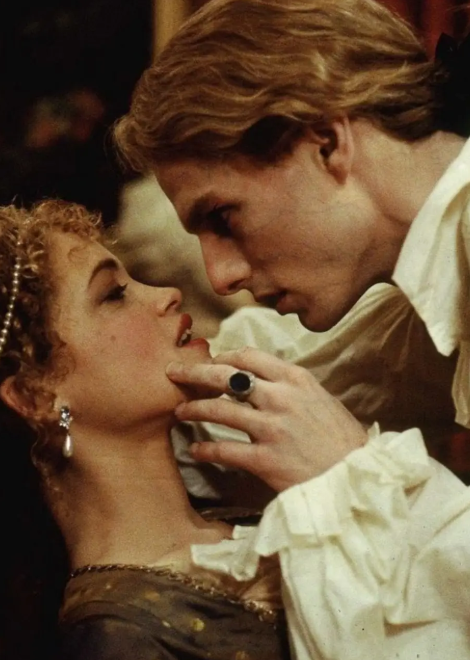
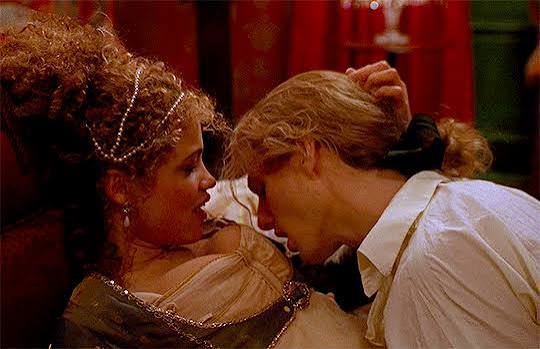
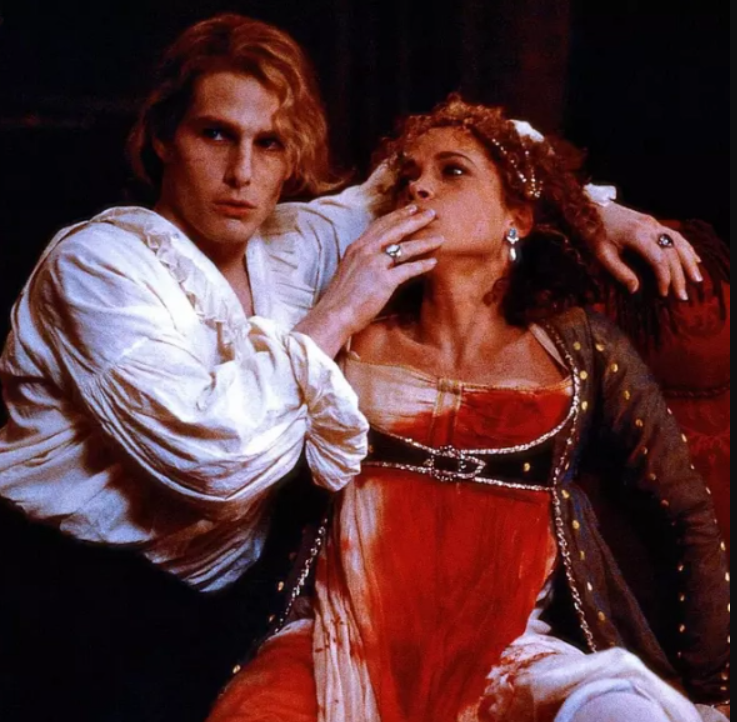
❤️🔥How My Odaxelagnia Fetish Began❤️🔥09:50 Oct 03 2026
Times Read: 137
Push up to my body, sink your teeth into my flesh
(Get undressed, t-taste the flesh)
Bite into me harder, sink your teeth into my flesh
(Pass the test, t-taste the flesh)
Deities or Vampires?22:16 Oct 01 2026
Times Read: 142
Deities or Vampires? Hecate and other Blood-Drinking Spirits of Ancient Times
Written By: Natalia Klimczak
Published: June 13th, 2016
Ancient Origins
Vampires are a relatively recent creation. However, most of the ancient world knew of the practice of consuming blood. It seems that this was a fascinating ritual centuries before the term ''vampire'' appeared. The ritual drinking of blood may sound today like a practice related to Satanists or fictional characters in fantasy novels or horror films. However, it was a part of mysterious rites related to many past civilizations. The custom of consuming blood always had a magical and mysterious meaning. It was used as a part of witchcraft, as a symbolic connection of the powers of life and death, as a religious practice, or as a form of offering to the gods.
The Blood of the Nile, Euphrates, and Tigris
According to many history books, the oldest ancient deity who consumed blood was probably Lilith. She is also described as the first demon, or a female spirit which exemplified all of the darkest attributes of the world.
However, it seems that the homeland of vampires is located near the Nile River. Some specialists in ancient Egyptian mythology believe that the first vampires were the gods Osiris and his brother Set. They were abandoned by their parents, but legends say that they were raised by a family which was into the dark arts. When Osiris grew up, he had knowledge and skills which allowed him to have powers much like those attributed to a vampire. The offerings to this god were also mostly related to blood and flesh. Inscriptions suggest that corpses were offered to Osiris too. However, Ancient Egyptian rituals are still full of secrets, so it is uncertain how much of this is true. Persian folklore also speaks of some spirits who consumed blood. The most famous of these was Estries. She was a demon - specifically a shapeshifter. Usually she was believed to have appeared as a beautiful woman who looked for men to drink their blood. If she was injured, she could only be healed if her attacker offered her salt and bread. She was also well-known in Jewish legends.
A Goddess of Magic and her Daughters
Hecate is one of the most mysterious goddesses. She was related to ancient magic, necromancy, sorcery and everything connected to ghosts. According to some scholars, the temples of Hecate could be locations for blood consumption.
This practice was forbidden in ancient Greece, but many temples had secret rituals. According to Greek law, human autopsies were also frowned upon, but it seems that Hecate’s ancient followers saw something magnetic in the idea of drinking blood. If anybody in Greece tried to drink blood it apparently had to come from an animal.
It is believed that Hecate used to drink blood during her feasts. Also, her daughter Empusa was described as a demon who consumed men’s blood. Hecate's servant Mormo drank blood too. (He is well known from Aristophanes’ works.) Other known ancient Greek vampires were Vrykolatios, who lived on Satorini Island, and Lamia, a queen from Lybia. She was seen as a demonic woman who drank children’s blood. Greek rituals may have been the inspiration for future stories of vampires in Romania and Bulgaria.
Wild Rituals in Asia
The religions of some tribes in the southern part of Asia were also related to blood rituals. However, the mentality connected with the cult of ritual sacrifices was very different than in Europe. In India, which was dominated by Persians for many centuries, the most important deity connected with blood rituals was Kali, who represents change, time, destruction, and preservation. The most famous legend about Kali talks about consuming the flesh of the demon Raktabija. The demon and Devi Druga (and her assistants) had a fight. The woman was losing, so Druga asked for help from the goddess Kali. According to the descriptions from a Devi Mahatmyam:
''Out of the surface of her (Durga's) forehead, fierce with frown, issued suddenly Kali of terrible countenance, armed with a sword and noose. Bearing the strange khatvanga (skull-topped staff), decorated with a garland of skulls, clad in a tiger's skin, very appalling owing to her emaciated flesh, with gaping mouth, fearful with her tongue lolling out, having deep reddish eyes, filling the regions of the sky with her roars, falling upon impetuously and slaughtering the great asuras in that army, she devoured those hordes of the foes of the devas.''
Kali consumed Raktabija. Blood rituals were very popular in her cult. The mysterious rituals of her temples are still full of secrets. The priests who continue traditional rituals in her name try to protect the details of the ceremonies. There were also rituals for consuming blood in the past of Pre-Columbian tribes (a topic too large for this article) as well as the legends of the Norse. People who lived in the territory of current Azerbaijan believed in the troubled spirit Hortdan. For centuries, Azeri people thought that it was a bad ghost which drank human blood. It was supposedly able to transform into other beings as well - usually animals.
The Forbidden History of Vampires
In the Christian religion, all of the aforementioned deities and demons became synonymous with the Devil. Over time, legends about vampires also appeared. These stories gave a bad reputation to many of the ancient goddesses. It is forbidden for Christians to drink blood - at least officially. However, one ritual relates to the symbolic drinking of Jesus’ blood. This suggests that blood rituals were considered as very important in pre-Christian cults, so the Christians decided to add a similar aspect to their ceremonies as well. Nowadays, the image of vampires is seen as something unnatural, but it seems that people knew of or practiced blood drinking rituals for at least 5000 years. Every region of the world has its own examples of deities who drank blood, or priests who worshiped deities by doing it.
REAL VAMPIRES LOVE VAMPIRE RAVE
Page generated in 0.0612 seconds.




COMMENTS
-