|
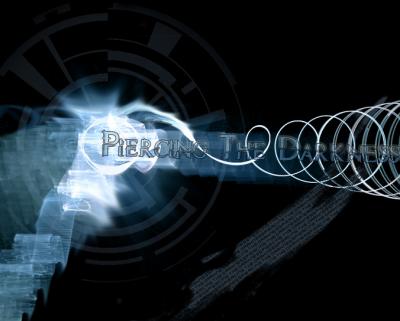
Piercing the Darkness:
An Interview with Katherine Ramsland
She's written a shelf full of books, from companion books for Anne Rice's Vampire Chronicles and Lives of The Mayfair Witches (The Vampire Companion and The Witches' Companion, respectively) to biographies of Anne Rice and Dean Koontz. Her latest book is entitled Piercing the Darkness: Uncovering the Vampires in America Today.
What is Piercing the Darkness about?
It started when I heard about a reporter in New York who disappeared one day while investigating Manhattan's vampire cults. Since I'd been watching the vampire scene for about ten years--mostly on a fictional level, but aware of some people who viewed themselves as vampires--I wanted to see what might have happened. So this is a book about my "undercover" explorations of vampire culture, from fans of fiction to psychic vampires to role players to Real Vampyres--those who drink blood and those who do not. In other words, it's about the diversity of the manifestations of how the vampire mythology speaks to people these days. Some stories are poignant and some romantic, while others are truly shocking. It's a controversial book, there's no doubt.
Why did you decide to do this book?
I was interested in seeing how vampire culture was evolving as we closed down the millennium, and then when this reporter disappeared, it opened up a way for me to go in. Sometimes I talked with people as myself, and sometimes I used a vampire persona. The idea was to get THEIR stories, while also bringing in my background in vampire scholarship. So I provided context from fiction and film. I also interviewed other vampire scholars, and some psychologists and theologians. But mostly I allowed the stories to be told in this book as they were told to me, no matter how the vampire was presented.
What sort of research did you conduct for Piercing the Darkness?
I went to vampire clubs, international conferences and expositions, scanned the Internet for vampire Web sites and chat rooms, invited people I spoke with to tell other people to contact me, went to role-playing sessions, went to vampire theatrical events, and contacted people for one-on-one interviews. I even went to Paris. Once people learned what I was doing, the word spread. And as I said above, there were times when I was truly undercover, not revealing my identity, because I wanted to feel more immersed in a situation than I would as just an interviewer--such as being a dominatrix at a fetish ball!
What was the most interesting aspect of researching the book?
I would say it was learning my own prejudices, as well as seeing the great range of ways that people play with this image. I heard so many things about what a "real" vampire is--most of which was contradictory--that I realized my own understanding of the vampire derived from another era--when Dracula, Dark Shadows and early Anne Rice were the influential sources. I do say so in the book, too. I don't want anyone to feel that I think I have the "truth." The book is certainly packed with many diverse perspectives.
The most interesting experience I had was meeting a "vampire" face-to-face who turned out to have either a very violent fantasy life or a truly violent experience from adopting the vampire persona. No one knew where I was when I went to meet him and I realized when I was with him that I might not get out alive. Call it crazy, stupid, whatever--it was the only time that my heart was pounding in just the way one might expect in meeting a real vampire. He scared me.
Do you have plans to write another vampire book at some point in the future?
I have to recover from this one first. I don't have any plans, no.
Of all the books you've written, which is your favorite and why?
That's hard to say, but probably this one and my two biographies (Anne Rice and Dean Koontz). I love to learn about people and hear their stories unfold. I also love doing detective work--which is what one does while putting together a biography--and watching it all gradually come together. You never really know what central theme will stand out until you do massive amounts of research so the anxiety level is high, and then suddenly--you have it! People might not think writing a biography is exciting stuff, but if you like the psychological angle as I do, it really is.
Have you always had an interest in the occult?
Yes, I guess I have. As a kid, I read stories about witches and vampires, but my true interest was in ghosts. Nothing scares me like a good, old-fashioned night spent in a haunted place. I still love that.
Any new projects on the horizon?
Nothing at the moment. I decided to return to school to get a master's degree in forensic psychology, because I'd like to write some books in that area. The criminal mind fascinates me, and I suppose that's why my encounter with a self-described vampire who also claimed to have perpetrated real violence against his prey was such an interesting encounter. I know that people in vampire culture will object to this guy being associated with them, but he does view himself as a vampire and I wasn't drawing any lines as to who's "in" and who's "out." To me, the outsider image encompasses all the disenfranchised--not just those who feel outside the status quo, but those who put those feelings into action. If that means cutting themselves or drinking blood or dressing up in fangs and rubber or just going into a cemetery to meditate, I really made no judgment.
I don't condone violence in the name of vampirism, and I make that clear in the book even as this story of violence unfolds. But I've already encountered people who want the vampire to represent only one type of outsider, or who want the vampire to be represented only through clans, or the way they are on "Buffy," or even those who want the vampire's image to be clean-cut, spiritual, and nurturing. Whatever. In the book, I make a statement that the ultimate pull of nineties culture is the idea that "This monster is mine." Well, the vampire is certainly a malleable image that can be stretched in many directions, but I don't think anyone owns it. Each to his or her own, and I tried to let the stories speak for themselves. That doesn't meant that because some "vampire" is a murderer that everyone else in vampire culture is violent, or that because a small percentage do drink blood, then all drink blood. That make such generalizations is ridiculous. As I pointed out already, it's a rich and diverse culture. I learned a lot and I'm glad I had the adventure.
|