You are not a Premium Member and you are blocking ads. You are using Vampire Rave for free. Vampire Rave relies on ads in order to operate. Please disable your Ad Blocker. This can easily be done for Vampire Rave only.
If you are using Chrome, click the red hand button at the top right of the screen:
Then select: Don't run on pages on this site
If you do it correctly, the red hand will turn to green and you will no longer see this message.
09:45 Sep 27 - SL1NKY was doing something Mysterious. 09:24 Sep 27 - SL1NKY was in Societies. 09:22 Sep 27 - SL1NKY was looking at their Profile. 09:22 Sep 27 - SL1NKY was looking at their Dashboard. 09:22 Sep 27 - SL1NKY was in Societies. 09:22 Sep 27 - SL1NKY was in Societies. 09:22 Sep 27 - SL1NKY was in Societies. 09:21 Sep 27 - SL1NKY was doing something Mysterious. 09:21 Sep 27 - SL1NKY was doing something Mysterious. 09:20 Sep 27 - SL1NKY was doing something Mysterious. 09:19 Sep 27 - SL1NKY was doing something Mysterious. 09:19 Sep 27 - SL1NKY was doing something Mysterious. 09:18 Sep 27 - SL1NKY was doing something Mysterious. 09:15 Sep 27 - SL1NKY was doing something Mysterious. 09:14 Sep 27 - SL1NKY was doing something Mysterious. 09:14 Sep 27 - SL1NKY was doing something Mysterious. 09:14 Sep 27 - SL1NKY was in The Forum. 09:05 Sep 27 - SL1NKY was in The Forum. 09:05 Sep 27 - SL1NKY was in The Forum. 09:05 Sep 27 - SL1NKY was in Societies. 09:05 Sep 27 - SL1NKY was in Societies. 09:05 Sep 27 - SL1NKY was looking at their Dashboard. 09:05 Sep 27 - SL1NKY was looking at what other people were doing. 09:05 Sep 27 - SL1NKY was on the Who's Online page.
Websites
Quote:
They fear me alone. They have good reason,
From the Aztec god of wind, rain and creation to the semi-divine human-snake creatures that guarded the Buddha, here are nine snakes or serpents that have emerged, through history or myth, to play important roles in the cultures they represent.
Snake in the Garden of Eden
A man. A woman. A snake. And a fateful apple. In the Old Testament Book of Genesis, a serpent memorably appears in the Garden of Eden, the earthly paradise God created for the first man and woman, Adam and Eve. The cunning snake convinced Eve to eat the forbidden fruit of the “tree of knowledge,” telling her that “when you eat from it your eyes will be opened, and you will be like God, knowing good and evil.”
When God learned of Adam and Eve’s transgression, he banished both of them from Eden and cursed the snake for its role, saying “You will crawl on your belly and you will eat dust all the days of your life.” Debate has long raged over whether the serpent in Genesis was a literal reptile, an allegory for sexual desire or temptation or even Satan himself.
Medusa and the Gorgons
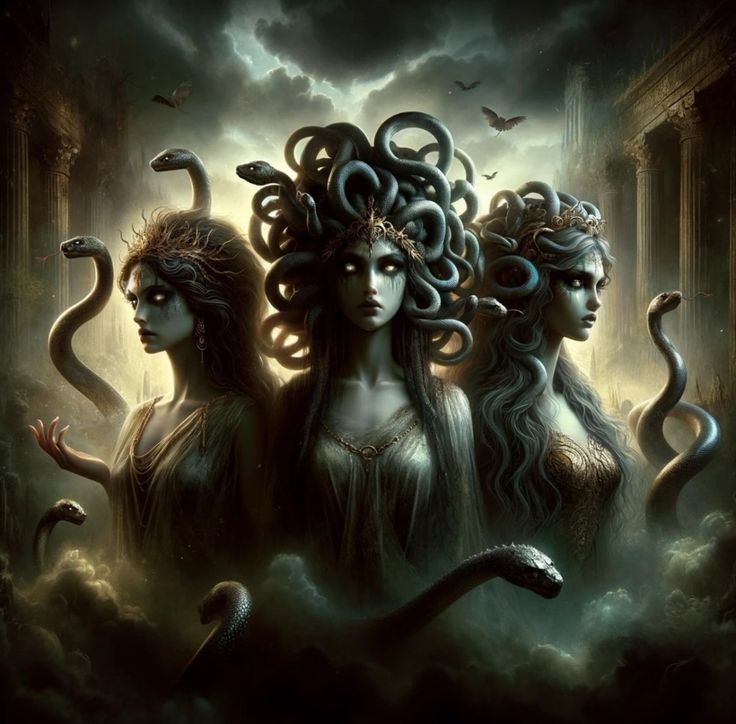
In Greek mythology, the Gorgons were snake women whose gazes would turn people to stone; they had serpents for hair, long claws, sharp teeth and scales covering their bodies. According to some myths, Medusa, the most famous of the Gorgons, was originally a beautiful woman. Her tryst with the god Poseidon in one of Athena’s temples infuriated the virgin goddess, who turned Medusa into a Gorgon as punishment.
Athena later helped the hero Perseus slay Medusa, giving him a shiny bronze shield that he used to watch the Gorgon’s reflection rather than looking directly at her. After cutting off Medusa’s fearsome head (from which her two children with Poseidon, Chrysaor and Pegasus, emerged) Perseus mounted it on his shield and used it to paralyze his enemies in battle.
Snakes that St. Patrick drove out of Ireland
Irish culture is brimming with myths and legends, perhaps none so prevalent as that of St. Patrick, Ireland’s patron saint, banishing every last snake from the Emerald Isle. As the story goes, St. Patrick, a fifth-century Christian missionary, was fasting for 40 days atop a hill when he was attacked by snakes. He waved his staff, driving all Ireland’s snakes into the sea.
Though Ireland—like New Zealand, Hawaii, Greenland, Iceland and Antarctica—is in fact devoid of snakes, that has less to do with St. Patrick than with the fact that since the post-glacial age it’s been surrounded by water, and before that its climate was too cold for any snakes to survive. The story makes more sense as an allegory: Snakes were a symbol of paganism, and Patrick was given credit for driving the pagans out and bringing Christianity to the Emerald Isle.
Jormungand, the Viking sea serpent
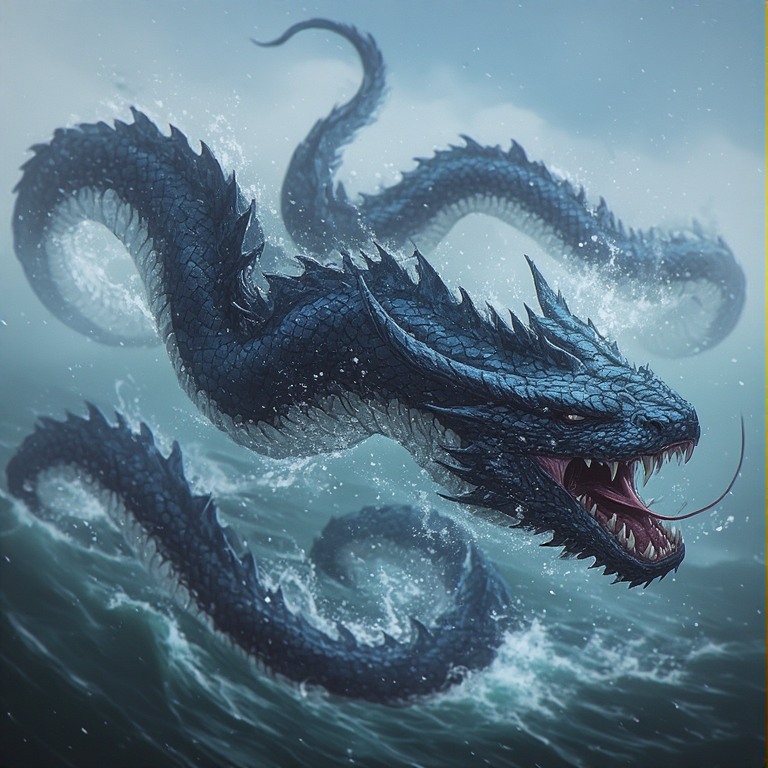
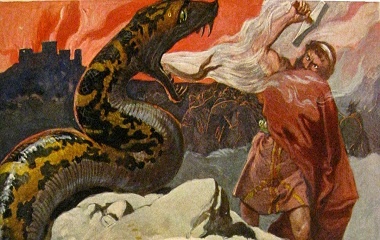
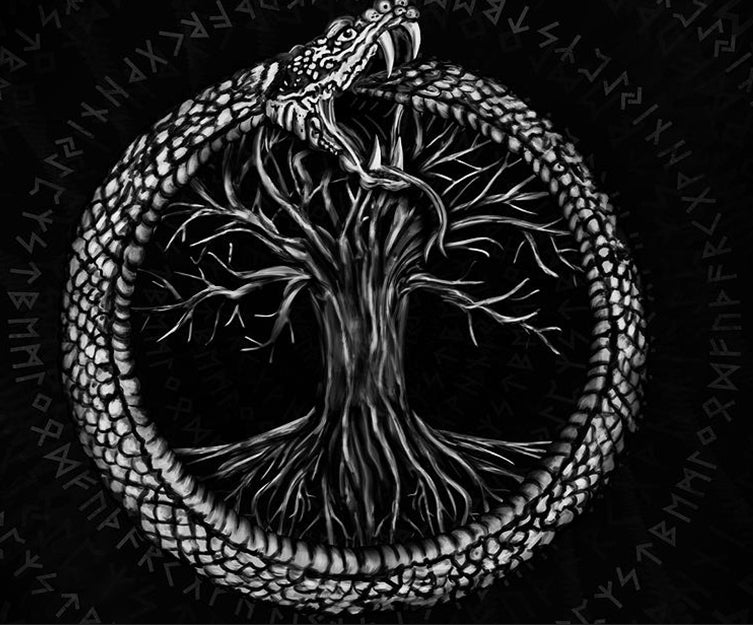
In Norse mythology, few stories are as dramatic as that of Jormungand, the powerful sea serpent. Jormungand, one of three children of the shape-shifting god Loki and the giantess Angrboda, was thrown into the sea by Odin, father of the powerful thunder god Thor. The serpent grew until his body encircled all of Midgard (or Earth), and he was able to grasp his own tail in his mouth.
At the start of Ragnarok, the final battle that would end in the earth’s destruction, Jormungand left the sea and rolled across the land wreaking havoc. In their climactic confrontation, Thor slew the serpent with his mighty hammer, Mjolnir, but only made it nine paces before falling dead himself, poisoned by the serpent’s deadly venom.
Quetzalcoatl
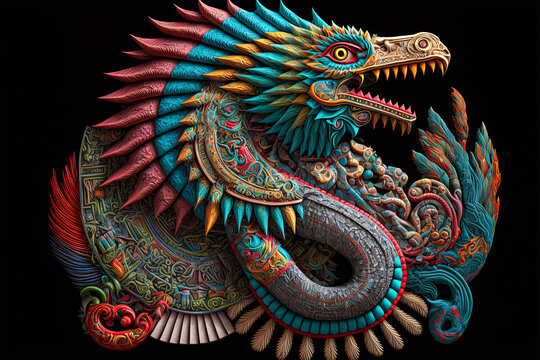
Among the most prominent deities in Mesoamerican cultures, Quetzalcoatl, or “Feathered Serpent,” was a mix of bird and rattlesnake (coatl is the Nahuatl word for serpent). The Aztec god of wind and rain, as well as learning, agriculture and science, Quetzalcoatl was said to have played a key role in the world’s creation.
In one version of the creation story, he and another god, Tezcatlipoca, transformed themselves into snakes and ripped a giant sea monster named Cipactli in half; one part of her became the earth, the other the sky. Though the earliest depictions of Quetzalcoatl show him clearly as a snake with a plume of feathers, later cultures represented him in human form.
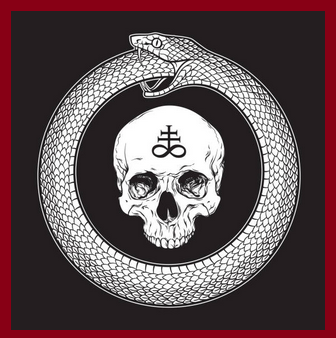
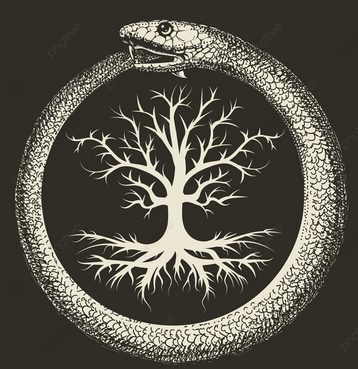
Ouroboros—an ancient symbol showing a serpent devouring its own tail—has existed across cultures for centuries. While many might know it as a representation of cycles like life, death, and rebirth, in Norse mythology and Viking culture, it holds deeper layers of meaning. For those who revere Norse mythology as more than just ancient stories, understanding the symbol’s presence across various mythologies adds another layer of spiritual reflection.
The name Ouroboros is Greek in origin. Oura means tail, while Boros is translated as eating. Taken together, it means ‘tail devourer’ or ‘one who eats the tail’. As a symbol, it depicts a serpent consuming its own tail.
The Ouroboros is one of the world’s most ancient mystical symbols, appearing in Egypt as early as 1600 BC. The Phoenicians adopted it, and later, the Greeks gave it its name. Over the centuries, it has been subject to several interpretations by different cultures. One is that it represents the Universe’s eternally cyclic nature, which creates life out of destruction. In alchemy, it symbolizes the continuous renewal of birth and death..
The mathematical symbol for infinity is said to be derived from a version of Ouroboros, with the serpent looped once before consuming its own tail. The Ouroboros also appears in numerous examples of Masonic imagery, particularly during the 17th century.
I had to apply some security updates. I needed to take the site down for a few hours to complete everything. I did it in the middle of the night.. When hopefully, most of you wouldn't notice :)