THIS JOURNAL IS ON 52 FAVORITE JOURNAL LISTSHonor: 2,692 [ Give / Take ]
5 entries this month
The Bizarre World of Japanese Vampires18:47 Jul 22 2026
Times Read: 179
The Bizarre World of Japanese Vampires
When it comes to sanguivorous supernatural creatures, variety is the spice of life
By Cezary Jan Strusiewicz
October 28, 2024
Tokyo Weekender
Vampires are staples of Halloween, but there’s not a whole lot of variety to them. You can make them sad Frenchmen, dress them in tight leather or relocate them to New Zealand — but they’re still creatures who drink human blood, sunburn easily, can’t have Italian cuisine and sometimes turn into bats. That’s basically it — in the West at least. In Japan, though, you get a little more variety thanks to bloodsucking monsters like the following:
List of Contents:
1. Suiko: The Water Tiger Vampires
2. Nukekubi: The Dissociative Vampires
3. Iso Onna: The Vampire-Hair Women by the Sea
4. Nobusuma and Nodeppo: The Vampire Flying Squirrels
5. Jubokko: The Vampire Trees
1. Suiko: The Water Tiger Vampires
Living in and around lakes, rivers and the like, suiko (literally, “water tiger”) get their name from the claw-like hooks growing out of their knees. These support small, imp-like bodies covered in impenetrable scales (in case anyone ever tries to come at them with a stake). Much like Dracula, suiko feed on human blood, which they obtain by drowning swimmers and sucking them dry like a juice box. In the process, they also consume the victim’s soul, and the more souls they collect, the tougher they look to their boss, the Dragon King, which comes with all sorts of perks, like career advancement, etc.
The worst part is that giving up swimming won’t help: Suiko can easily survive on land. Given that suiko can also use hypnosis, become invisible and survive in sunlight, you’d probably have a better chance of surviving an attack by a land tiger than one by a water tiger.
2. Nukekubi: The Dissociative Vampires
Sometimes in movies, it’s possible to kill a vampire by cutting off its head. Sadly, that would not work on nukekubi “removable head” vampires. The reason why is right there in the name. During the day, these creatures are normal human women unaware they’re under a nukekubi curse that at night will cause their heads to detach from their bodies and fly off into the night to feed on blood.
In most versions of the myth, the afflicted women have no memory of their nighttime killings, causing them to start families and basically go about their lives blissfully ignorant. That’s unfortunate, as the curse is passed down from mother to daughter. Legends from Ibaraki say that some nukekubi can be cured by eating the liver of a white dog, but in most cases, the only cure is keeping the flying vampire head from reattaching itself to its body before sunrise — so, basically, death.
3. Iso Onna: The Vampire-Hair Women by the Sea
Native to the shores of Kyushu, the beautiful iso onna, or “coast women,” are vampires that like to prey on their lunch’s goodwill as well as their blood. Prowling the coastline and dripping wet, iso onna look like victims of a shipwreck at first glance, causing passing men to rush to their help. Once they’re close enough, iso onna paralyze them with a piercing shriek and drag them into the sea. There, they use their prehensile hair to jab into their victims’ bodies and suck their blood out.
As there are many versions of the iso onna myth, these bewitching vampires come in many forms. In some, they have hypnotic voices that men find irresistible. In others, they’re translucent and kind of look like a Western cartoon ghost from the waist down. Some other myths say that iso onna are actually kaiju-sized and can destroy ships with their bare hands.
According to stories from Kitakyushu, iso onna are actually crab spirits and as such can’t swim. You can avoid them out on the sea provided you don’t drop any ropes into the water that they can use to scuttle up onboard and use your blood for shampoo.
4. Nobusuma and Nodeppo: The Vampire Flying Squirrels
Not only does Japan have TWO vampire flying squirrels, but they also help explain the invention of Pokémon, since both sanguineous squirrels exhibit a total disregard for evolutionary principles.
The legend of nobusuma says that when a bat reaches an extremely old age, it transforms into a magical Japanese giant flying squirrel, a real but skittish herbivore that uses the skin between its limbs to glide from tree to tree. Nobusuma can do the same, but when they spot a human, they glide onto the person’s face, latch on like the Facehugger from Alien and start sucking out their victim’s blood. They can also eat fire, and between that and being small and adorable, nobusuma are kind of like reverse dragons.
Nodeppo are very similar to nobusuma except for two key differences. They evolve from raccoon dogs, which — while still making Darwin angry — isn’t as big a leap as from bat to squirrel. Also, they shoot bats out of their mouths. That sentence doesn’t make a lot of sense, but there’s no other way of putting it. These vampires shoot bats. Out of their mouths. Like a gun. If there were a gun capable of shooting bats instead of bullets. Hence their name, which translates to “wild gun.”
5. Jubokko: The Vampire Trees
Legends say that sakura have pink blossoms because there are bodies buried beneath them that nourish them with blood. That, of course, is nonsense. When a tree sucks blood through its roots, it doesn’t become a beautiful cherry; it becomes a jubokko (“tree child”), a kind of vampire tree. OBVIOUSLY.
Mainly found on bloody battlefields — which Japan has had no shortage of throughout the centuries — these once-regular trees develop a taste for blood and become jubokko. These bloodthirsty trees won’t just wait around for someone to conveniently die within reach of their root systems — oh, no. Instead, jubokko will use their suddenly human-limb-like branches to catch passersby, pierce their bodies and suck out their blood through hollow tube-like twigs. The exsanguinated corpse will then slowly decay beneath the tree, joining the pile of skeletons already there, which — not to victim blame or anything — the most recent tree-snack should have spotted and kept as far away from as possible. That’s why they put crossbones on bottles of poison — bones are a universal sign for “do not approach.”
Vampire's Rebirth08:38 Jul 22 2026
Times Read: 212
Vampire’s Rebirth: From Monstrous Undead Creature to Sexy and Romantic Byronic Seducer in One Ghost Story
Published By Sam George
March 29, 2019
The Conversation
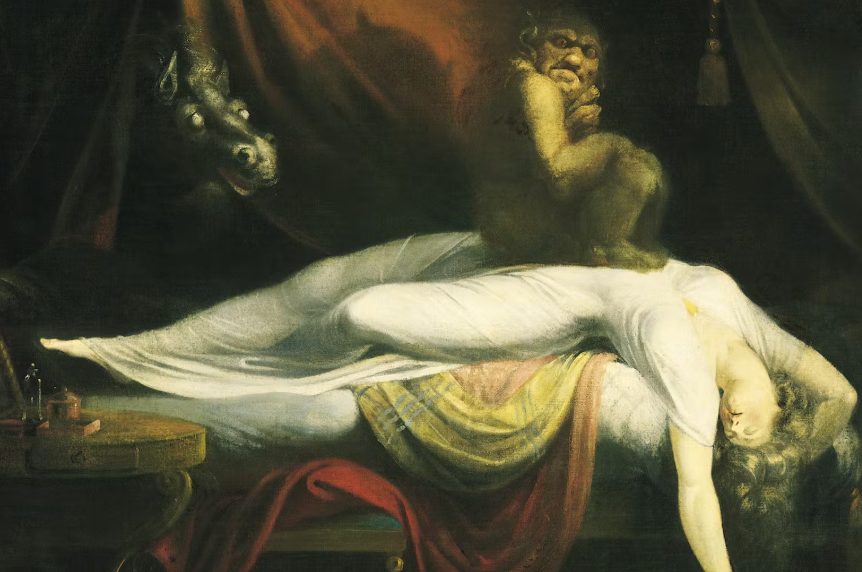
The Nightmare by John Henry Fuseli. Detroit Institute of Arts
Victorian physician John Polidori took the vampire out of the forests of eastern Europe, gave him an aristocratic lineage and placed him into the drawing rooms of Romantic-era England. His tale The Vampyre, published 200 years ago – on April 1 1819, was the first sustained fictional treatment of the vampire and completely recast the folklore and mythology on which it drew. The vampire figure abandoned its peasant roots and left its calling card in polite society in London.
The story emerged out of the same storytelling contest at the Villa Diodati that gave birth to that other archetype of the Gothic heritage, Frankenstein’s monster. Present at this gathering were Polidori (then Byron’s physician) as well as Mary Godwin, the author of Frankenstein, Claire Clairmont, Mary’s stepsister, Mary’s soon-to-be husband Percy Shelley, and – crucially – Lord Byron.
Byron’s contribution to the contest was an inconclusive fragment about a mysterious man, Augustus Darvell, characterised by “a cureless disquiet”. Polidori took this fragment and turned it into the sensational tale of the vampire Lord Ruthven, preying on the vulnerable women of society.
After its magazine debut the story was published in book form and went through seven English printings in 1819 alone. It was adapted for the stage the following year by melodramatic playwright James Robinson Planché, one of a growing number of vampire theatricals inspired by Polidori, such as those by Charles Nodier and others.
It was then expanded into a two-volume French novel by Cyprien Bérard, Lord Ruthwen ou les vampires. By 1830 it had been translated into German, Italian, Spanish, and Swedish.
Despite all these imitations and adaptations, “Poor Polidori”, as Mary Shelley liked to call him, has all but been forgotten and his lively tale has often been dismissed as a crude narrative, written under the influence of a greater, more subtle talent, Byron. And yet it was Polidori not Byron who succeeded in founding the entire modern tradition of vampire fiction.
Peasant to patrician
The vampire prior to this had been a blood-gorged, animalistic monster of the Slavic peasantry. In his study of the origins of Vampire lore, Vampires, Burials and Death, American scholar Paul Barber described the traditional image of the undead bloodsucker thus:
with long fingernails and a stubbly beard […] his face ruddy and swollen. He would wear informal attire — a linen shroud – and would look for all the world like a dishevelled peasant.
Polidori transformed the East European peasant vampire of old into a pale-faced, dead-eyed, licentious English aristocrat. This deceiving, dashing and cursed creature was in possession of “irresistible powers of seduction”, haunting the drawing rooms of Western society undetected. In the hands of Polidori, under the influence of Byron, vampires transitioned from dishevelled peasants into alluring, seductive aristocrats in the 19th century.
This elevation in social status is not all. Polidori’s The Vampyre is responsible for a number of groundbreaking innovations. He established links to the aristocracy – where there had never before been an urban vampire, let alone one as educated and high in social rank. He also introduced the notion of the vampire as sexual predator, showing his readers, for the first time, the vampire as rake or libertine – a real “lady killer”. As he wrote in his novella:
The guardians hastened to protect Miss Aubrey; but when they arrived, it was too late. Lord Ruthven had disappeared and Aubrey’s sister had glutted the thirst of a VAMPYRE!
Mad and bad
Lord Ruthven is a satirical portrait of Byron as a seducer of women in polite society. “Mad, bad, and dangerous to know” – as the aristocratic writer Lady Caroline Lamb described the lover who had spurned her. This is the image we have of the vampire. Lamb cast Byron as the dark and duplicitous Gothic seducer, Lord Ruthven in her 1816 novel Glenarvon. In turn, Polidori took the name Lord Ruthven in order to create the first literary vampire.
Lord Ruthven spawned a series of saturnine or demonic lovers in turn, from the Brontës’ Mr Rochester to the more sexy incarnations of Dracula and the contemporary paranormal romances of mortal women seduced by brooding bad and dangerous vampires.
Polidori’s vampire, despite being something of a blank canvas, is sexualised and mesmeric, providing a template not only for Count Dracula but for the “Byronic hero” that features in Gothic romance from pre-Victorian times down to present-day paranormal romances such as Twilight. Edward Cullen – played by Robert Pattison, continuing the tradition of British actors playing vampires from Christopher Lee to Gary Oldman – is a reproduction of this earlier archetype. He’s something of a consumerist fantasy – as expensive as diamonds, marble or crystal:
His skin white […] literally sparkled, like thousands of tiny diamonds were embedded in the surface. He lay perfectly still in the grass, his shirt open over his sculptured incandescent chest, his scintillating arms bare […] a perfect statue carved in some unknown stone, smooth like marble, glittering like crystal.
Cullen’s aristocratic charm and anachronistic way of speaking (“I endeavoured to secure your hand” he tells Bella) indicate he is a relic of earlier models of vampiric masculinity, further evidence of the long-reaching legacy of Polidori’s vampire.
As Catherine Spooner, Professor of Gothic Literature at Lancaster University, has argued in a collection of essays about Vampires – Open Graves, Open Minds: Representations of Vampires and the Undead which I co-edited in 2012: “Over a period of about 200 years vampires have changed from the grotty living corpses of folklore to witty, sexy, super achievers.”
Polidori died in London in August 1821, weighed down by depression and gambling debts. It is said that he committed suicide by means of cyanide but that, to protect his family’s name, the coroner gave a verdict of death by natural causes. Sadly he wasn’t to know the fame his creation would achieve as the star of hundreds of books, plays and films – and millions of nightmares.
Vampires: A Gothic Affair15:00 Jul 21 2026
Times Read: 261
Vampires: A Gothic Affair
Posted by Amaranth
FashionsAlternative
The first recorded use of the term Vampire (or the interchangeable Vampyre) in English is in the translation of the German pamphlet entitled “The Travels of three Gentlemen, from Venice to Hamburgh, being the grand Tour of Germany, in the Year 1734.” The writer of this story tells of his meeting with Johann Weichardt von Valvasor who explaines the phenomenon of exhuming bodies and staking them which latterly became known as Magia Posthuma. The author also refers to a Latin transcript from M. Jo. Henr. Zopfius which became one of the leading descriptions of Vampires, and talks about them rising from their graves, turid and full of blood. “Their countenances are fresh and ruddy; and their nails, as well as hair, very much grown.” However reports of these exhumed vampire stakings were already rife in Hungary as early as 1732.
Although the actual concept of the vampire dates much much earlier. Cultures such as the Mesopotamians, Hebrews, Ancient Greeks, and Romans all had tales of demons and spirits which are considered precursors to modern vampires. One of my favourite vampire tale is from the Jewish Aggadic midrashim: risen from the Babylonian and Assyrian tales of Lilitu – Lilith was Adam’s first wife, who was created at the same time and from the same earth as Adam as opposed to Eve who was created from one of his ribs. Lilith left Adam after she refused to become subservient to him. She then mated with archangel Samael and never returned to the Garden of Eden. From that day onward she would forever prey on his descendants. This tale brings with it all I love about Vampires; myth, religion, ancient leanings as well as the primeval, powerful, sexual and monstrous nature of them.
Although Vampires in modern day are universally accepted as pure myth and legend, people continued to be fascinated with them. The gothic and darker cultures have understandably taken to this archetype with relish as Demondaz, a well-known figure in the UK Goth and Vampire scenes explains: “I think it is easy to see how the iconic black elegant evening wear of the vampire has been adopted by many of the traditional Goths – they may not like to hear that but vampires have been around a lot longer than the goth scene and that’s incontrovertible! Other aspects of goth, imagery; affected aloofness, pale skinned beauty, piercing and striking eyes (achieved with contact lenses if not naturally) also arguably must have origins taken from classic vampire media. You only have to look at the garment tags, shop names, of the attire that Goths like to wear and buy to see that the Vampire is an icon of gothic dress and self-image.”
However Father Sebastiaan, who makes customised fangs for Vampire fans all over the world and is soon to launch his reality show “the Fangvan”, explains that interest in the vampire is not solely confined to these darker scenes: “Vampires and goths have alot in common yet more different. 95% of my fang clients are not goths, and they still love the darkness and “Vampyre Virtues” as I call them of mystery, romance, seduction, sensuality, etc. Gothic is a musical and fashion culture celebrating death. Vampirism is a mythology made manifest in people’s lives touching a much wider and diverse audience, yet still those who are “Vampyres” and embrace the lifestyle surrounding the vampire mythos are increasing.” Amusingly he goes on to suggest that while Goths are reclusive and focused on death, the vampire fans he encounters hail from a far more open and varied scenes and are focused on life: “Unlike the gothic scene which is a culture, Vampyrism is a lifestyle and is very much about engaging life, being in the world and living as much as possible. The crossover often happens in style and some musical tastes, but you would just have as many people like rap artists, ballet dancers, reggae singers, techno kids and mainstream people involved in the vampire path vs. goths who are often an introverted subculture and very boxed in.” I think this neatly encompasses the more traditional view of the Vampire to that of the recent “Twilight” age. While I would argue that in appreciating death Goths too celebrate life and indeed the Gothic countenance is a lifestyle, the seeming downplay of the darker side of the vampire and humanity in general is what makes for the easy popularisation we see today. And even this Sebastiaan can’t disagree with, “I remember 20 years ago being a “vampire” was something scary and wearing fangs on the subway in NYC would freak people out. Today when I am making fangs and kids of my clients are running up and old ladies think they are cool.”
That mainstream incorporation of Vampires, which Goth is also starting to receive, becomes a double edged sword for many. While gaining acceptance for what has in the past seemed strange and/or frightening and seeing more people enjoying the genre is on the face of it, a great thing – it also tends to water down the intensity and cheapen the ideals. This jealous guarding of ones own identity is also part of the reason some Goths have derided the oft-made vampire association. For myself, while I cringe at the tabloid “vampires” there are just as many “goths” who reflect badly on that culture in the very same vein (if you pardon the pun). It can also be said that Goths who make such an adamant stand against the trappings of enjoyment the vampire culture indulge in and hold their own brand of lifestyle as law, are the flip side of the coin to those who ridiculously immerse themselves into their fantasy. Both are extremist views and it just amuses me that neither side see this. There cannot be any doubt that there are threads of commonality with the shared aesthetics, literature, music and even our largest UK Goth Festival which set in Dracula’s Whitby. It’s up to each individual which threads they choose to use and the type of cloth they choose to weave.
The recent spate of Vampire themed TV series’ such as True Blood, Vampire Diaries and indeed Twilight has definitely brought the Vampire into the spotlight of late and doesn’t look like that is due to change any time soon. However both Sebastiaan and Demondaz suggest that it is not such a new phenomenon as a reoccurring resurgence and gently changing one. “The reason vampires have become fashionable in mainstream society is not new, they have always been with us and there are many generations of fans. Things move and change in this immortal archetype from ancient Sumarian Lilitu to Edward from Twilight. The vampire is everything we want to be and is almost tangible, it is something we can become or something we can be killed by, the ultimate duality and tragedy. This touches us, and since it goes in waves with Twilight and True Blood over now, some new incarnation will arise for example the new Dracula TV series.” explaines Sebastiaan. Demondaz concurs, “Arguably vampires have been perennially fashionable for many years and continue to be so. Even in mainstream and high fashion that gothic look loves to come out – normally around autumn pretty much every other year – and what were we saying about vampires and Goths and their mutual tastes in the sartorial shades of black earlier. The Aristocrats of the Night have been appearing in popular media for over 200 years now and still going strong! It is impressive in a day and age of big screen superheroes and science fiction that the old fiend, the vampire, still stands tall and proud among these peers.”
So what is it that makes vampirism such an alluring subject? Dirk von Heinrichshorst who is currently creating a book on Vampires with the photography art of his wife Viona, explains his interest, “For centuries vampires have frightened and inspired people all over the world, so when working on fantasy related projects on a daily basis it’s impossible to escape the idea of embracing the vampire theme at some point in time. On top of that I think we all like the romanticized version of the vampire, especially being very beautiful and living forever, which is certainly appealing.” For Sebastiaan his particular fascination with vampires started with his mother who loved horror movies and introduced them too him: “Of all the spirits, zombies, werewolves, serial killers and other evil monsters, vampires stood out, they were intelligent, mysterious, magical, artistic, cultured and served as a great role model for me. More heroic villains, and inspired me for the empowering elements of their nature, especially since I am an eternal optimist and try to see the best in everyone.” Demondaz explains his interest thus, “I have been fascinated, perhaps somewhat obsessed, by vampires for many years now. They are the iconic aristocrats of the night; stylish, sexy, seductive and the very epitome of evil – but done in such a manner that, curiously, they become the anti-hero and always steal the scene – and a few hearts on the way!”
So however you decide to enjoy your vampire indulgence or worship in the House of Goth, build your own legend and enjoy it for the brief respite it is, until we meet again in the bright light of reality.
Medical Explanation for Vampirism05:07 Jul 07 2026
Times Read: 332
The Myth of a Medical Explanation for Vampirism: The problem is that real people suffer from these conditions
Published By Kelsey Kennedy
October 30, 2017
AtlasObsura
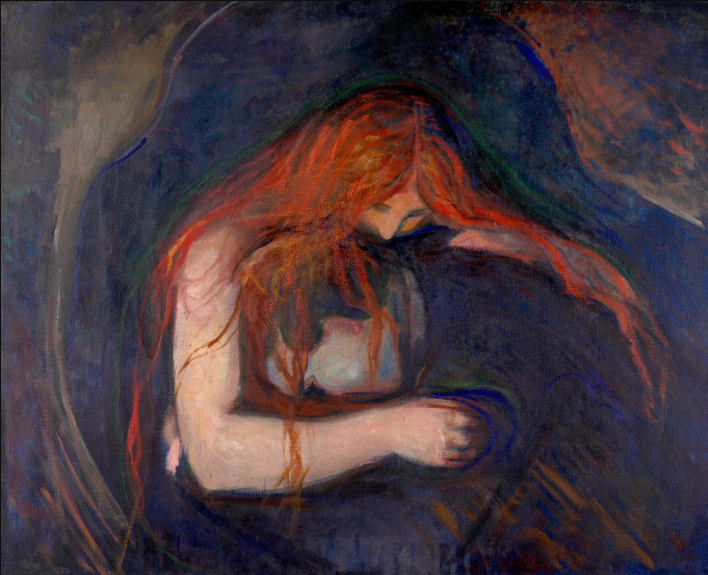
Edvard Munch’s Love and Pain (1895), often referred to as Vampire. Munch is reported to have said it depicts a woman kissing a man’s neck—nothing more. Munch Museum/Public Domain
THE VAMPIRE MYTH HAS BEEN around, in one form or another, for millennia. Tales of the undead with a penchant for sucking life from living were even told in ancient Egypt, long before Vlad III or Bram Stoker. The specifics of the legend vary in different parts of the world, but the core tale, involving blood-drinking revenants, comes up again and again. Modern scholars have looked to medical literature for an explanation of the universality of the myth, and in some cases suggested that what we know as vampirism is, in fact, based on the symptoms of known diseases. But connecting a feared mythical creature to a real human disease—and the real people who suffer from it—has consequences.
The most widely known vampire mythology today draws on Slavic folklore and stories from the 18th century. The stories tend to involve a recently deceased family member who, upon exhumation, didn’t seem to have decomposed at all, and instead appeared to be full of fresh blood. This was still the thinking in early-19th-century New England. Novels such as Carmilla (1871) and Dracula (1897) featured vampires that were mobile, rather underground undead. Eventually, light sensitivity and an aversion to garlic were added to the classic vampire folklore.
Connecting the many variations of the vampire myth to diseases that we now understand is a tall order, but people have tried. A 1998 article in the journal Neurology posits that rabies’s characteristic hallucinations and agitation are one source of the myth. Pellagra, a deficiency of niacin and tryptophan that causes sun-sensitive skin, a red tongue, and erratic behavior, has also been fingered as a culprit. Tuberculosis and schizophrenia, too.
In a talk at a conference in 1985, Canadian biochemist David H. Dolphin proposed that vampire and werewolf myths derived from a disease known as porphyria, the New York Times reported. The symptoms of congenital erythropoietic porphyria, in particular, were cited: light-sensitive skin, a lack of heme (a molecule in hemoglobin) that could have driven sufferers to bite others and drink blood, and sensitivity to garlic. It was not the first time Dolphin had suggested the link. He mentioned it in a 1982 speech to the Royal Society and again during a 1984 appearance on NBC.
No one apparently questioned the hypothesis at the conference, but it has since become the subject of plenty of contrary opinions. A 1995 article in Postgraduate Medical Journal, for example, questioned the evidence Dolphin presented, and noted that light sensitivity is a relatively modern addition to vampire lore, that people with the disease don’t crave blood, and that the disease is extremely rare. Perhaps the strongest condemnation of Dolphin’s idea was a 1990 article in Perspectives in Biology and Medicine. The authors, Mary G. Winkler and Karl E. Anderson, called Dolphin’s hypothesis a “medicalization of a myth.”
“There is a necessity for scientists and the media to set aside cynical assumptions about their audiences and consider first and foremost their responsibilities to the communities of patients who are affected by diseases and by stories about their diseases,” they wrote. They stated that despite critical comments from other doctors and scientists, Dolphin and the media continued to distort the public’s perception of rare diseases. That has translated to real effects on patients. One doctor, they wrote, “described a porphyria patient who was depressed and otherwise adversely affected by reports in the press linking porphyria and vampirism and required reassurance that he was not descended from vampires and would not turn into one.” Winkler and Anderson also cite the murder of a man in Virginia who claimed to have porphyria and thought he was a vampire.
Winkler and Anderson pointed out a critical flaw in the porphyria explanation. “Dolphin’s hypothesis assumes that vampires were real enough to require a medical explanation.” A medical explanation probably isn’t necessary at all—the myths could easily come from a misunderstanding of decomposition, or be the product of a generations-long game of “telephone” coupled with active imaginations.
“There will be a continuing need for the medical community to dispel this and other ill-founded notions that may link legends and myths to specific diseases,” they wrote. They advised doctors and scientists to avoid “interpreting mythology” as a topic for actual medical study or “allowing ancient, dark fears to dim scientific understanding.”
But their article certainly wasn’t the stake in the heart of the vampire-porphyria myth. Scholarly articles in well-known journals and press releases continue to link the genetic disease and the immortal mythical affliction, often around this time of year. Some have taken the message to heart, though. A 2016 article in JAMA Dermatology noted that, “Life with porphyria is difficult enough without everyone thinking you are Dracula.”
The Vampires Of India17:40 Jul 04 2026
Times Read: 384
The Vampires Of India: Indian Mythology’s & Folklores’ Links To The Classic Conjurer
Written by Meghna Mathew
Homegrown.com
It’s the stuff you see in movies – sharp fang-like teeth with blood dripping down the edge of their lips, a white-washed face with high hair and eyes that can only be described as marbles reflecting a beam of light. If you haven’t been able to catch on, we’re talking about vampires. Now more popular as mystical creatures, interesting enough to base several movies and TV series on, vampires have had a dynamic rise to popularity. The vampire myth isn’t exactly what it used to be, as we doubt any of them could ever match up to Edward Cullen of Twilight (2008) or Damon Salvatore of The Vampire Diaries (2009).
A lesser-known fact, however, is that India has several links to the modern vampire, owing to its vast mythology and folklore. They may not be the shirt-and-cape-clad beings that come up in your mind, but here are a few instances of Indian creatures that might just be more vampire-like than the vampire itself.
Vetala
Most of what Indians know of Vetala comes from the stories of Vikram and Betaal of Betaal Pachisi written in the 11th century. Vetala, however, holds a much deeper and disturbing history. Per mythology, Vetala is considered to be the one that takes possession of corpses in cemeteries and haunts the neighbouring villages and its people. Hence, technically, they never really die, much like any other vampire.
Vetala was believed to cause all kinds of horrific incidents such as the murder of children and miscarriages. Apparently, they are stuck in what is called ‘the twilight zone’ which lies between life and after-life. Neither entirely dead nor entirely alive, Vetala definitely holds resemblance to the vampires of today.
Rakshasa
Considered one of the scariest beings to have existed in Hindu mythology, the Rakshasa was believed to be a demon of sorts. They could shapeshift into a being of their choice ranging from animals to monsters, and Rakshasi (female Rakshasa) could even turn themselves into attractive women to lure men.
Much like vampires, they are dispelled by direct sunlight or light and thrive in the darkness. They were believed to wander around cemeteries at night and cause evil activities to take place. Agni (fire) was used to do away with the darkness, so as to keep away the Rakshasa too. The most powerful Rakshasa to have ever lived was Ravana, the 10-headed creature from the Ramayana.
Peymakilir & Pey
Fulfilling the all-important blood-thirsty criteria of vampires, Peymakilir and her male counterpart, Pey would viciously feast on human bodies. While Pey was known for downing all the blood available in each body, Peymakilir was more popular for performing a ritualistic dance on the corpses.
As part of the Tamil folklore, Peymakilir and Pey were vampires of battlegrounds and wars. For this reason, they were also sometimes considered angels of mercy as they would end the misery of soldiers that were close to death and were suffering from agonising pain.
Pishacha
With red, bulging eyes such as those of modern vampires, Pishachas are creatures from Hindu mythology that are nocturnal and hunt cremation grounds during the nights. They are also believed to have the power of shapeshifting and also becoming invisible. Apparently, they could also possess humans and drive them insane.
With sunlight as an opposing force, the Pishacha is close to your standard vampire in many ways – darkness-loving, blood-hungry and carrying the overall appearance of a vampire doppelganger.
Far from what they began as, vampires seem to have maintained their spooky charm through the years. Who knew, that India had a part to play in this, too?
RECENT FORUM POSTS
Venerable Sire (131)
Spooky Crossovers
| aliens and starship troopers |
22:36 - July 20 2026
READ POST

Great Sire (110)
Three Words Ending
13:55 - December 02 2025
READ POST
Great Sire (110)
Opposite Day
21:31 - November 27 2025
READ POST
REAL VAMPIRES LOVE VAMPIRE RAVE
Page generated in 0.1121 seconds.



COMMENTS
-