|
Vampirism came about as an answer to the misunderstood stages of death and decay far before Christianity ever existed, but as the faith spread across Europe, Christianity encountered the varied beliefs of vampirism and helped shape them.
As the Christian church grew and broke apart and grew even more, vampirism was not of interest to the church; prior to 1645. Early in Christian history only a handful of Church documents even mentions the creatures of the night. One example was a law decreed by Charlemagne in the eleventh century that condemned anyone who attacked or killed a person believed to be a vampire or a witch. The Malleus Maleficarum, published in 1485, is another rare document that states that the devil uses corpses to cause harm to mankind.
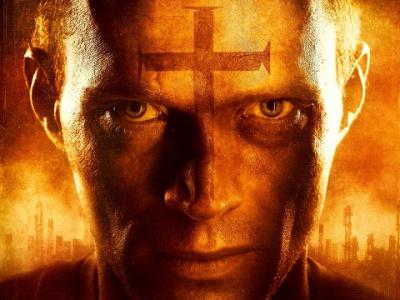
In 1645, however, Leo Allatius wrote a book that would change the ideas surrounding vampires and vampirism forever. His De Greacorum bodie quirundam opinationibus defined vrykolakas, or Greek vampire, as a dead person who did not decay in a way that was considered normal and timely in manner. He continued on to state that when a vrykolakas was found it was to be considered the work of the devil and a clergyman should be called to repeat the service of the dead. The vrykolakas were not the return of deceased loved ones, however, but the reanimation of bodies by either the devil or the devil's minions. Allatius explained that because vampirism was a form of Satanism, vampires were not able to exist in the realm of the holy. It is for this reason that vampires are believed to flee from church symbols such as crucifixes, crosses, incense, holy water, the consecrated host, the Bible, prayer books, prayers, and mass. Consecrated churches became a safe haven from vampires because of the holy ground on which it stands while desecrated churches attracted vampires as well as other evil things. With this book, the priest became the ultimate vampire hunter. It is interesting to note that the Eastern Orthodox Church tried to squelch the superstitious beliefs of vampires by threatening priests with excommunication if they participated in anti-vampire activities.
Just as Christianity became a weapon against vampirism, it also came to be a source of vampirism. Un-baptized persons could become revenants upon death. Those who had committed heresy, those who were excommunicated, and people who failed to be good members of the church may become vampires after death. Persons who did not adhere to the sacraments or the dead who did not have respectable loved ones who followed burial requirements are also at risk for becoming the undead.
In the eighteenth century, vampire attacks began to inflict the population. Scores of deceased Christians were dug up and desecrated and this greatly concerned church leaders. Cardinal Schtrattembach, the Roman Catholic bishop of Olmutz, Germany, asked the pope on how to deal with the vampire reports. The pope looked to Giuseppe Davanzati who had written the Dissertazione sopra I Vampiri in 1744 for advice. Devanzati told the pope that vampires were in the imagination of the people and that pastoral care should be given to the people who reported vampires rather than the vampire itself.
Two years after Davanzati, Dom Augustin Calmet, a Bible scholar, published his Dissertations sur les Apparitions des Anges des Demons et des Espits, et sur les revenants, et Vampires de Hingrie, deBoheme, de Moravie, et de Silesie which considered the possibility of vampires. His book became very popular with the people, although unfavorable with the church, and there were multiple printings and translations. Even though his third edition stated that vampires did not exist, the earlier editions were so popular that few people learned of his final position on the subject.
Although the end of the eighteenth century brought about a secularization of vampires, Christianity continues to be one of the classic elements of the creatures of the night.
|