|
1847: b. 8 Nov., 15 The Crescent (Marino), Fairview [Clontarf], Co. Dublin; bapt. Abraham, 2nd son and 3rd child of Abraham Stoker of Derry, petty clerk of Chief Secretary’s Office, with his wife Charlotte Matilde Blake [née] Thornley, who witnessed the cholera epidemic of 1832 in Sligo and was a social reformer in Dublin, concerned with education for the deaf and dumb and other causes; sickly as a child and was unable to walk until the age of seven, though without any positive diagnosis; ed. TCD; studied science, maths, oratory, history, and composition, and was taught by Edmund Dowden; grad. with “Double First” (Hons.); elected by turns President of the “Phil” [DU Philosophical Society], where he speaks inaugurally on ‘Sensationalism in Fiction and Society’ (1867), and Auditor of the Hist. (1872), lecturing on ‘The Necessity for Political Honesty’; becomes a regular visitor to the Wilde’s home at Merrion Sq. (Dublin); describes himself contemporaneously as a ‘philosophical Home Ruler’; responds to Prof. Dowden’s advocacy of Walt Whitman, and writes two lengthy letters of adulation to the American poet praising particularly the idea of manly friendship, the first (1871) remaining unposted for four years; brothers George, Dick and William all trained as doctors; enters civil service, first in Dublin Castle and then throughout the country as Inspector of Petty Sessions;
1871: contrib. theatre reviews to Dublin Evening Mail (ed. Henry Maunsell), 1871-75, writing enthusiastic drama criticism; completes extra-mural MA in mathematics (TCD); friendly with John Dillon, and other nationalists; his mother and father departed for retirement to Switzerland; occupies lodgings at 73 Harcourt St., 30 Kildare St., 47 Kildare St., 73 Harcourt St. (again), 119 Baggot St., and 16 Harcourt St.; his first story, “The Crystal Cup”, placed with London Society; receives repeated rejection slips for “Jack Hommon’s Vote”; contribs. serial stories to The Shamrock incl. “The Primrose Path” (Sept. 1872), “Buried Treasure” (March 1875), “The Chain of Destiny” (May 1875), a tale of cholera; also “The Dualitists, or The Death Doom of the Double Born” (Theatre Annual, 1887); contribs. unsigned commentaries to The Warder (prop. J. S. Le Fanu at that date); ed. The Irish Echo, a Dublin evening paper based on London morning papers; death of father in Switzerland, Oct. 1876; organises reception for Henry Irving [bapt. John Henry Bobdribb] in Dublin, 1876, including a “College Night” at the theatre and a popular procession through the city in which the actor’s carriage was drawn by the students; meets Irving, 3 Dec. 1876, and forms a close bond; organises further Dublin visits for Irving; writes ‘London in view!’ in diary, 22 Nov. 1877;
1878: issues Duties of the Clerks of Petty Sessions in Ireland (1878); moves to London as Irving’s mgr. (‘Irving’s treasure’ to some but is ‘literary henchman’, acc. Shaw); opens The Lyceum in collaboration with H. J. Loveday (its former stage-manager), thus forming ‘the Unholy Trinity’ that would dominate London stage, 1878-1905; meets Sir Richard Francis Burton on the boat train to Dublin 1879; courts Florence Anne Lemon Balcombe, the friend of Oscar Wilde (who called her ‘Florrie’ and requested back from her the gold cross he had given); m. at St. Anne’s, Dawson St., Dublin, 4 Dec. 1878, she being cited on the certificate as a minor; settles at 7, Southampton St., Covent Gdn., London (unfurnished rooms, £100 p.a.); Florence refuses sex after the birth of the first and only child, [Irving] Noel Thornley Stoker, in 1879 (according to Enid Stoker, gm. of biographer Daniel Farson); family moves to 27, Cheyne Walk, Chelsea, 1881, Stoker cycling from there to work at the Lyceum Theatre off the Strand; rescues a suicide from drowning in the river, 13 Sept. 1882, the old man later dying on the Stoker’s dining table causing Florence to hate the house; moves to 17 St. Leonard’s Terrace; issues Under the Sunset (1882), a novel, and “Lies and Lilies” (1882), a story; brings Lyceum on first tour of America, taking Boston Theatre, 1883; visits Walt Whitman at his home, 20 March 1884 (the man ‘fulfils the boy’); visits Quebec, Sept. 1884; lectures on “A Glimpse of America”, 28 Dec. 1885; sails for America to arrange further Lyceum tour with Irving’s sensational version of Faust, Autumn 1886; Florence and Noel escape from shipwreck on board steamship “Victoria” nr. Dieppe, 13 April 1887; Stoker lectures in Lincoln [Th.] at Chickering Hall, New York, 25 Nov. 1887, using Whitman’s “Memoranda During the War” as source; occurrence of ‘Jack the Ripper’ murders, Whitechapel, 1888 (once linked by Stoker to his famous novel in an introduction); visits Whitman for the last time and tries to persuade him to expurgate homosexual references in Leaves of Grasses;
1889: issues The Snake’s Pass, a novel set in the 19th-c. west of Ireland, and centre on hated moneylender Black Murdock, serialised in The People and other provincial papers, 1889; published as book Nov. 1890; sends a presentation copy to Gladstone; passes three weeks at Whitby, staying at 6 Royal Crescent, summer 1890; makes his first notes for Dracula and reads Wilkinson’s Account of Wallachia and Moldavia (1820) in Whitby Public Library, encountering name of ‘Dracula’ there; learns that the Dmitry ran aground there on 24 Oct. 1885 from coastal guardsman and local Gazette, 1890; writes to Michael Davitt to elicit favourable review of The Snake’s Pass in The Labour World, 1890; meets Violet Hunt and her circle near Whitby, 1890; called to the English bar, 30 April 1890, but never takes a client; promotes efforts to produce a stage-version of William O’Brien’s When We Were Boys for the London stage, 1890; contribs. to The Nineteenth Century, Fortnightly Review; and occas. to The Daily Telegraph; joint-ventures with William Heinemann to relaunch Tauchnitz series; gains Tennyson’s approval for a stage adaptation of his [Thomas à] Becket, 1891; undertakes walking tour in Scotland visiting Slains Castle, poss. inspiration for Dracula’s abode, 1893; issues “The Squaw” (1893), a story; involved with Mark Twain in Paige Compositor Manufacturing Co., an abortive type-setting scheme, soon overthrown by Mergenthaler’s Linotype; Irving knighted on Queen’s birthday list at the instance of Gladstone, 1895; Stoker’s br. Thornley Stoker (Pres. of Royal Coll. of Surgeons, Dublin), also knighted, 1895; a portrait of Florence Stoker by Walter Osborne us exhibited and admired at Royal Academic (London), Summer 1895; Stoker[s] pass two summers at Kilmarock Arms Hotel, Cruden Bay [meaning ‘blood of the Danes’], Scotland, composing Dracula, 1895-96;
1896: travels to USA with Irving, winter 1896; feuding between Irving and Shaw; on 20 May 189[6] signs contract with Archibald Constable (2 Whitehall Gdns. Westminster) for a novel provisionally called “The Un-dead” and inspired by ancient tales of vampirism and some contemporary reportage of 1887 but also heavily influenced by “Carmilla”, the vampire tale by J. S. Le Fanu whose example Stoker had already followed in “The Chain of Destiny” (Shamrock, 1875); a typescript of the novel published as Dracula on 26 May 1897; borrowes a substantial sum from Hall Caine; Dracula went into a 6p. Popular Edn. in 1901; dramatic copyright protected by an advertised reading at Lyceum on morning of 18 May 1897; Irving repeatedly refuses to play part of Dracula; Stokers move to 18 St Leonard’s Terrace, Chelsea, London; visits America with Irving for the second time, Oct. 1903-April 1904, and [seemingly] presents the typescript of Dracula to the unknown American who partly inspired it by providing vampire-material from The World (NY) in 1896; Lyceum scenery destroyed in storage by fire, 18 Feb. 1898; Irving falls ill with pleurisy and signs away The Lyceum to a consortium without consulting Stoker; Stoker writes a cryptic biographical notice on himself for Who’s Who (under recreations, ‘pretty much the same as those of the other children of Adam’); departs aboard SS Marquette on US tour, Oct. 1899;
1902: death of Charlotte Stoker, 1902 (bur. St. Michan’s, Dublin); increasing alienation from Irving following the latter’s marriage to Eliza Aria; spends summers at The Crookit Lum (cottage), Cruden Bay, 1902 and years after, writes The Mystery of the Sea there , a novel involving ghosts and cipher, 1902; issuesThe Jewel of the Seven Stars (1903), a novel with an Egyptian mummy plot, ded. to Eleanor [viz, Elinor Wyle] and Constance Hoyt, two beautiful American girls who visited London; issues The Man (1905), in which Harold An Wolf, a Cambridge grad. and Alaskan adventurer, is matched with Stephen Norman, a ‘New Woman’; Irving collapses and dies after a performance of his own adaptation of Tennyson’s Becket during his ‘farewell’ tour in Bradford, Friday 13 Oct. 1905; Stoker returns to journalism; contribs. interviews to The Daily Chronicle; issues Personal Reminiscences of Henry Irving, 2 vols. (1906), better received than any of his fiction though afterwards trashed by Austin Brereton in his life of Irving (1908); briefly returns to theatre management for David Bishopham’s musical performance of The Vicar of Wakefield, 1906; organises English section of Paris Theatrical Exhibition; appears as model for William II Building the Tower of London in Goldsborough Anderson’s mural in the Royal Exchange (London); club & society membership included Dramatic Debaters, Society of Authors, Shakespeare Memorial Soc., Urban Club, and New Vagabond Club (with Hall Caine); contribs. ‘Fifty Years on Stage: An Appreciation of Ellen Terry’ to The Graphic in her jubilee year, 1906; experiences declining health from 1905;
1907: suffers a minor stroke, being nursed by Florence; moves to 4 Durham Place (former home of Captain Bligh), 1907; joins the staff of Daily Chronicle; contribs. theatrical profiles to World (NY); participates prominently in campaign to censor ‘unclean’ books; writes “The Censorship of Fiction” for The Nineteenth Century & After, and “The Censorship of Stage Plays”, the latter warning against decentralisation of the Lord Chamberlain’s duties among to local authorities; contribs. “The Great White Fair in Dublin” and “The World’s Greatest Ship-building Yard” [Harland & Woolff, Belfast] to an ‘Irish Number’ of The World’s Work (Vol. 9, 1907); issues Famous Impostors (1910), which includes the assertion that Elizabeth I was a man in disguise; issues The Lady of the Shroud (1909), a novel ded. to Geneviève Ward; suffers second stroke and receives £100 [pension], 1910; seeks grant from Royal Literary Fund, 1911; becomes member of National Liberal Club; moves from Chelsea to 26, St. George’s Sq., Belgravia; issues The Lair of the White Worm (1911), in which the worm, Lady Arebella, is eradicated by the hero Adam Salton, with much sexual symbolism [tunnels, &c.]; defends Capt. E. J. Smith of the Titanic; d. 20 April; death cert. admitting interpretation of syphilis (disputed by Belford); cremated and bur. at East Columbarium, Golders Green, London, where his wife’s ashes were afterwards distributed; obits. appeared in London Times and Irish Times, 22 April 1912, the latter calling him ‘a typical Irishman of the best type’ and citing novels ‘of a sensational character’ without naming Dracula);
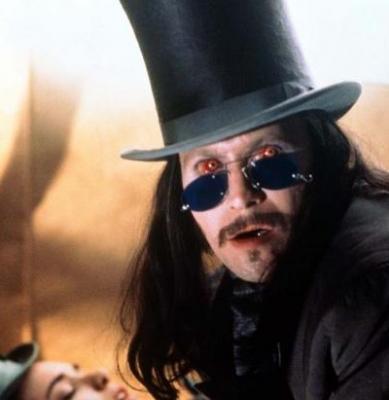
Posthumous: Florence Stoker sells 317 items of his literary effects at Sotheby’s, 7 July 1913; moves to 4 Kinnerton Studios (now Braddock Hse.), Knightsbridge, 1914; issues Dracula’s Guest, a chapter excluded from the 1897 novel [and still omitted], dealing with a Jonathan Harker’s encounter with a vampiric femme fatale on his way to Dracula’s castle; also incls. “The Judge’s House”, dealing with the nervous breakdown of the title-character; Mrs. Stoker donates relevant papers to Irving Collection at Stratford-upon-Avon; she strenuously contests the rights of Friedrich Wilhem Murnau’s vampire film Nosferatu: Eine Symphonie des Grauens (1922), through the Society of Authors, resulting in ostensible destruction of the film, July 1925; first dramatic production of Dracula directed by Hamilton Deane, Little Theatre, 14 Feb. 1927; filmed for Universal Studios by Tod Browning with Bela Lugosi in lead (later buried in his Dracula cloak), 1931; first filmed in colour by Hammer Films with Christopher Lee as Count Dracula and Peter Cushing as Van Helsing, 1958 - to be followed by numerous Lee sequels; skit-version filmed by Roman Polanski, as Dance of the Vampires, with Sharon Tate, in 1967; Vampires in New York, an AIDS-themed Dracula, directed by Francis Ford Coppola, with Brad Pitt, 1997; the first full biography issued by Harry Ludlam (1962), after which another by Stoker’s grand-nephew Daniel Farson (1975), alleging that his death was caused by syphilis; another issued by Barbara Belford (1996); the working papers for Dracula are held in Philadelphia; an archive of Stoker family papers was presented to TCD Library by Noel Dobbs, Aug. 1999; new biography issued Paul Murray (2004), with much new material from papers of Sir Thornley Stoker - who was the object of well-known comments by George Moore; four new Irish stamps were issued to commemorate Stoker in 2004.
Works
Dracula: The Text
Fiction
Under the Sunset (London: Sampson Low 1882) [stories, ostens. for children, incl. ‘The Invisible Giant’];
The Snake’s Pass (London: Sampson Low 1890) [err. 1891 DIL];
The Shoulder of Shasta (London: A. Constable 1895);
The Watter’s Mou (London: A Constable 1895);
Dracula (London [Westminster]: A. Constable 1897); Do. [1st American edn.] (NY: Doubleday and McClure 1899) [infra]; Do. [pop. edn.] (London: Constable 1901); Do. [ another edn.] (1910); Do. [another edn.] Rider Edn. 1925);
Miss Betty (London: C. A. Pearson 1898);
The Mystery of the Sea ([q. pub.] 1902);
The Jewel of the Seven Stars (London: Heinemann 1903) [ded. Elinor and Constance Hoyt];
The Man (London: Heinemann 1905);
Lady Athylene (London: Heinemann 1908);
The Lady of the Shroud (London: Heinemann 1909) [ded. Geneviève Ward];
Personal Reminiscences of Henry Irving, 2 vols. (London: Heinemann 1906);
Snowbound: The Record of a Theatrical Touring Party (London: Collier 1908);
Collections
Dracula’s Guest and Other Weird Stories (London: George Routledge 1914); Do. [2nd edn.] (London: Jarrolds 1966, 1974), 192pp., [ ‘an hitherto unpublished episode from Dracula’, p.8]. [see contents & related editions, infra];
C. Osborne, ed., The Bram Stoker Bedside Companion (London: Gollancz 1973);
The Bram Stoker Omnibus, intro. by Fay Weldon (London: Orion 1992), xiv, 576pp. [includes Dracula; The Lair of the White Worm, and Dracula’s Guest];
Note also Bram Stoker’s Dracula, by Saberhagen and Hart (Pan) [adaptation].
Miscellaneous
College Historical Society; Address Delivered in the Dining Hall of Trinity College, at the First Meeting of the Twenty-Eighth Session on Wednesday Evening, November 13, 1872. (Dublin: James Charles & Son 1872);
Personal Reminiscences of Henry Irving, 2 vols. (London: Heinemann 1906);
Snowbound: The Record of a Theatrical Touring Party (London: Collier 1908);
Famous Imposters (London: Sidgewick & Jackson 1910); The Lair of the White Worm (London: William Rider [1911])
Journal contribs.
‘The Chain of Destiny’, Shamrock, 12/446-9 (1-22 March 1875), pp.498-99, 514-16, 530-33, 546-48;
‘The Great White Fair in Dublin: How there has arisen on the site of the old Donnybrook Fair a great exhibition as typical of the new Ireland as the former festival was of the Ireland of the past’, in The World’s Work: An Illustrated Magazine of Efficiency and Progress, Vol. 9 (May 1907), pp.570-76;
‘The World’s Greatest Shipbuilding Yard: Impressions of a visit to Messrs Harland and Wolff’s ship-building yards at Belfast’, in ibid., pp.647-590;
“Pat” [pseud.], ‘Pioneering on the West Coast’, ibid., pp.630-33.
“The American ‘Tramp’ Question and the Old English Vagrancy Laws”. North American Review, CXC: 648 (Nov. 1909), 605-614 [all cited in Morash, ‘That Other World (… &c.)’, 1998.]
In translation
Seán Ó Cuirrín trans., Dracula (BAC: Oifig Diolta Foillseacháin Rialtais 1933);
Dracula, trans. Mary Arrigan & ed. Emmett B. Arrigan (BAC: An Gúm 1998), 88pp.
Critical Editions
Nina Auerbach & David J. Skal, eds., Bram Stoker, Dracula [1897]: authoritative text, contexts, reviews and reactions, dramatic and film variations, criticism [A Norton Critical Edition] (NY: Norton 1997), 492pp. [incls. working papers together with the deleted first chap. ‘Dracula’s Guest’; Emily Gerard’s account of Transylvania, Varney the Vampire, &c., with introd. essays by Phyllis Roth, Franco Moretti, Christopher Craft, Bram Dijkstra, Stephen Arata, Talia Schaffer; also Christopher Frayling, ‘Bram Stoker’s Working Papers for Dracula’, pp.339-50];
Maurice Hindle, ed., Dracula, [1897] (Harmondsworth: Penguin 1993).
Reprint Editions
Dracula
Dracula (NY: [Dover] 1979); Dracula (Dingle: Brandon, rep. 1992); Do., [Penguin Pop. Classics] (Harmonsworth: Penguin 1994), 449pp.; Do. (Wordsworth Classics 1994) [num. others internationally]
L. Woolf, ed., The Essential Dracula (NY 1993) [incl. draft Chap. 1: ‘Dracula’s Guest’].
A. N. Wilson, ed., Dracula [World’s Classics] (OUP 1983);
Marjorie Howes, ed., Dracula [Everyman’s Library] (London: Dent 1993), xvi, 382pp.;
Maud Ellmann, ed., Dracula [World Classics] (Oxford: OUP 1996), 389pp.;
Clive Leatherdale, annot. & ed., Dracula Unearthed (Westcliff-on-Sea: Desert Island Books 1998), 512pp.;
David Rogers, ‘Introduction’, Dracula ( Ware: Wordsworth Editions 2000), q.pp.;
Dracula: The Author’s Cut [Creation classics] ([London]: Creation 2005), 263pp. [1901 edition with additional chapter, being Dracula’s Guest, publ. posthum., 1914].
Other titles
The Jewel of Seven Stars [1904] (OUP 1996), 204pp.;
[... &c.; uncompiled]
Bibliography
William Hughes, Bram Stoker [Abraham Stoker], 1847-1912: A Bibliography [Victorian Fiction Research Guide] (University of Queensland 1997), iv, 73pp.
Irish Adaptions
Dracula, or How’s Your Blood Count?, by Bram Stoker, adapted by Micky O’Donoughue and Johnny Hanrahan, 8 Sept.-1 Oct. 1994, Lyric Theatre, Belfast, advertised as ‘classic family entertainment’.
The Gutenberg Project: online editions at the Gutenberg Project incl. Dracula [text & audio]; Dracula’s Guest; The Lady of the Shroud; The Jewel of Seven Star; The Man; The Lair of the White Worm (See Gutenberg - Index, 6 June 2007; and Stoker texts)
Bibliographical details
Dracula's Guest(s)
Dracula’s Guest, and Other Weird Stories (London: George Routledge & Sons [1914]), 200pp. [contains “Dracula’s Guest”; “The Judge’s House”; “The Squaw”; “The Secret of the Growing Gold”; “A Gipsy Prophecy”; “The Coming of Abel Behenna”; “The Burial of the Rats; “A Dream of Red Hands”; “Crooken Sands”]. Note also: Dracula’s Guest [ltd. souvenir edition] (London: Prince of Wales’ Theatre 1927) , q.pp.
Dracula’s Guest and Other Stories, with an introduction by David Stuart Davies (London: Wordsworth 2006), 224pp. [13 stories incl.“Dracula’s Guest”;“The Judge’s House”; “The Burial of the Rats”; “The Secret of Growing Gold”, and “The Gypsy’s Prophecy”. Note: Harker, the narrator of the first, writes: ’On top of the tomb, seemingly driven through the solid marble - for the structure was composed of a few vast blocks of stone - was a great iron spike or stake. On going to the back I saw, graven in great Russian letters: “The Dead Travel Fast’”.]
Dracula’s Guest, and Other Weird Stories [with] The Lair of the White Worm, ed., intro., and annot. by Kate Hebblethwaite [Black Classics] (London: Penguin 2006), xlvi, 408pp.
|