|
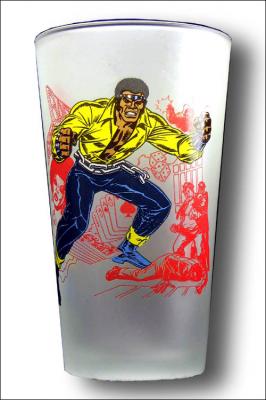
In a rare freak incident that is hard to believe... young Luke Cage, who was part of the Bloods gang, was sent to prison by the feds for a crime he did not commit. Can you imagine?? He then underwent an experimental procedure that gave him titanium-hard skin along with superhuman strength. Cleared of his crime, he became a Power Man “hero for hire.” However, Cage never took money for doing the right thing, but Marvel never did get around to explaining how he paid the rent and utilities, let alone food. We are still waiting to hear back from Marvel.
Later, Cage formed a business partnership with Iron Fist. And Marvel then signed them on to do an awesome series with a coincidental cover name of "Power Man & Iron Fist," the two became one of the better-known superhero duos of the 1980s, right after Blue Beetle and Booster Gold and McMillian and Wife as well as TJ Hooker and Heather Locklier.... Mmmmm Heather!
Speaking of Blaxploitation, Cage became a groundbreaking and controversial hero. He was Marvel's entry into the 1970s blaxploitation trend and sported a stereotypically streetwise tongue that only the black heroes seemed to ... sport. One of Cage's traditional catch phrases was the ever so loving, "Sweet Christmas!" When asked why he used such a fanciful and colorful lingo, Cage responded, "Cuz Holy Moly and Great Scott was already claimed Mutha! Now get the hell off my block... Chump cracka!" There you have it.
The political scene during the 70s set the tone for the Black comic book hero. Conflicts between the decent Black superhero (who traditionally came, more often than not, from The Ghetto surrounded by gang violence, drugs, welfare checks and absent, imprisoned fathers) and his ideological (white) opponent, The Man - the politically, republican conservative, sleazy, wealthy, again... White, who was usually a mobster boss and who wanted to keep the Ghetto minorities in their place.
Whitewash was Marvel’s first black superhero. He appeared in the 1940's war comic "Young Allies" and was drawn in full blackface fashion. The black superheroes were basically created and portrayed biased on the negative perceptions and stereotypes of the artists of the time. Marvel’s Black Panther (1966) was followed by DC’s Black Lightning and Marvel’s Luke Cage, both poster children for the comic industry’s Blaxploitation of the 70’s.
... Fool, why you still reading 'bout this? Start buying pint glasses. I pity the fool who don't buy this glass.
|