|
According to European folklore, a vampire is a corpse that resurrects itself from its grave at night to go and feed on the blood of other living animals and humans. There are three species of vampire bat, so-called because a vampire bat’s diet consists of nothing but the blood acquired from mammals and birds.
What are Vampire Bats?
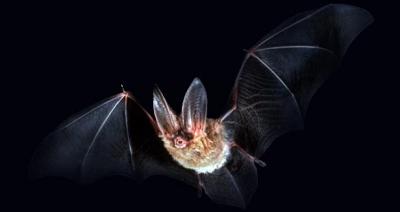
Vampire bats are not fictitious animals that fly across the moon on Halloween, but are small, brown, furry, flying mammals belonging to the subfamily Desmodontidae. There are three species of vampire bat, and each belongs to a different genus. These are:
* Desmodus rotundus - or the common vampire bat. As its name suggests, this species is the most common of the three. The common vampire bat has 20 teeth, pointed ears and a long thumb.
* Diaemus youngi - or the white-winged vampire bat. This species is less prevalent than the common vampire bat. The white-winged vampire bat has 22 teeth, white-edged wings and a short thumb.
* Diphylla ecaudata - or the hairy-legged vampire bat. This species of vampire bat is perhaps the least familiar of the three. The hairy-legged vampire bat has 26 teeth, short round ears, a short thumb and a well-furred interfemoral membrane.
Vampire bats are found in tropical and subtropical Central and South America. Male and female vampire bats often roost together during the day in colonies consisting of anything from 100 to 2,000 individuals. Roosting areas include caves, tree hollows, rock crevices, mines and abandoned buildings.
How do Vampire Bats Drink the Blood of Living Animals?
Vampire bats feed at night. They hunt their prey using sensory receptors in their snouts, which detect heat emitted from living animals. Vampire bats are haematophagous animals, meaning they feed on the blood of mammals such as horses, cows and pigs, as well as birds, and even the occasional human. Some other examples of animals which practice haematophagy include mosquitoes, midges, leeches, bedbugs, ticks and fleas.
When a vampire bat locates a suitable animal to feed on, it uses its tiny, razor-sharp incisor teeth to bite into the skin. It then uses its tongue to lap at the blood which flows from the wound. A vampire bat will feed for approximately 20 minutes, and in that time will drink about 30 millilitres of blood. A vampire bat’s saliva contains an anticoagulant known as draculin, which prevents the bat’s victim’s blood from clotting during feeding.
Vampire bats are so light, agile and stealth-like, that they are able to drink the blood from a sleeping animal without disturbing it. Vampire bat bites are not harmful unless the bite results in an infection such as rabies, which is transmitted via the saliva of an infected bat.
Vampire bats may not bear much resemblance to the corpses that come to life in Michael Jackson’s Thriller, but a vampire bat’s thirst for blood is such that it can double its own bodyweight in one feeding.
Unlike vampire bats, fruit bats are vegetarian, and as their name suggests, eat fruit as part of their diet
|