|
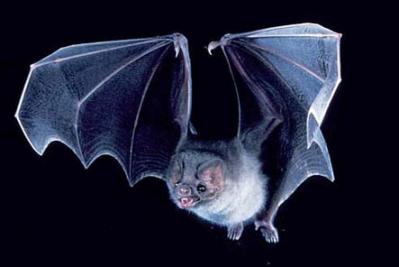
Throughout Latin America, from Mexico to Argentina, Common vampire bats transmit infectious diseases such as rabies to animals and humans. Factors that influence the spread of disease within bat populations and transmission to other species are not well understood, making it difficult to predict rabies outbreaks in humans and livestock. Now, a team of researchers, led by associate professor Sonia Altizer of the University of Georgia Odum School of Ecology, hopes to close these knowledge gaps with a $580,000 grant from the National Science Foundation for a three-year study of rabies in vampire bats in Peru.
Altizer and Ph.D. student Daniel G. Streicker, in collaboration with investigators at the U.S. Centers for Disease Control and Prevention, the University of Michigan, the National University of San Marcos and the Peruvian Ministries of Health and Agriculture, will explore how human activities affect rabies virus transmission in vampire bats and how those changes might alter the risk of rabies infection for humans, domesticated animals and wildlife.
Streicker, who co-authored a recent paper on cross-species transmission of rabies that was published in the journal Science, said that Peru is currently experiencing a great deal of environmental change, with deforestation and the introduction of livestock occurring in many areas. “Most wildlife doesn’t benefit from this kind of change,” he said, “but vampire bats do.”
Vampire bats are responsible for a disproportionate share of human and livestock rabies cases because the bites that occur when they feed on other animals provide an ideal mechanism for the transmission of rabies.
“Introducing a herd of cattle is like putting out a huge platter of food for the bats,” said Altizer.“We’re looking at how this affects the population size of bats, and how it affects the transmission of rabies. We predict that more bats will make it easier for rabies to persist in an area year-round.”
With a better understanding of how bat densities are changing and the effect that has on rabies transmission, Altizer, Streicker and their colleagues hope that more effective rabies control strategies can be developed.Current control efforts consist of killing bats, either by destroying the caves where they roost or by poisoning them.
Altizer explained that no one knows if killing bats actually helps reduce rabies transmission. “It might be counterproductive,” she said.“If you kill the bats that are exposed to the virus and therefore immune, you’re taking away the protected population and clearing the path for an influx of susceptible animals, and that could potentially cause a rabies outbreak.”
Altizer and Streicker are enthusiastic about the scope of the project, in terms of both its multi-faceted research methodology and the international collaboration it has engendered. They will be working with Peruvian college students in the field to monitor rabies transmission across a network of 18 sites and will analyze samples of the virus from humans, bats and livestock using genetic sequencing.They will also work with scientists at the CDC to determine how long infected vampire bats are capable of transmitting rabies virus, whether infected bats ever survive, and, if so, whether they then become immune. Finally, they will create a mathematical model to test whether their understanding of the way the virus behaves corresponds with what they see in the field.
The importance of this study goes beyond its implications for controlling the spread of rabies. “The case of vampire bat rabies in Peru provides a microcosm to understand unintended feedbacks of human subsidization of wildlife through infectious diseases,” said Streicker. “Outbreaks of Nipah virus in humans and house finch conjunctivitis in birds have been attributed to ecological and behavioral changes that occur when wildlife adapt to novel food sources. As agricultural intensification and urbanization are increasing threats to natural systems worldwide, a mechanistic understanding of the links between ecosystem health, animal health and human health will be critical for both human health and wildlife conservation.”
Provided by University of Georgia
|