|
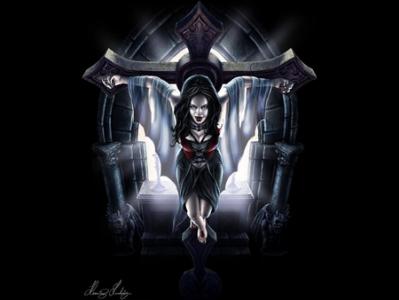
Vampires’ connection to Christianity well exceeds the symbolic crucifix ward. A highly regarded theory of the first vampire dates back to creation. According to Jewish doctrine, Adam had a first wife who they call Lilith. The tale is based on the Book of Genesis, God created man and woman simultaneously (Genesis 1:27). At some point Adam and this first wife separated. Later (Genesis 2:21-22), God created Eve from Adam. The Genesis Rabbah, a Jewish commentary on the Book of Genesis, explains this proposed discrepancy as Adam having a wife made of the earth, Lilith. Lilith was Adam’s equal, unlike Eve who was created from Adam. The Alphabet of Ben Sira takes the story further by explaining the reason for Lilith leaving the Garden of Eden. Lilith opposed submitting to her husband in procreation and therefore fled. God sent angels to ask her to return. Lilith refused. At which point, she became a demon. Throughout history, Lilith appeared in her demon form. In Mesopotamia, as a feared storm demon. In Isaiah, as the screeching owl or Strogoi (an original term for vampire or night demon). This theory shows Lilith as the original vampire.
Given this explanation, the connection between the vampire and Christianity dates to creation. Some argue creation predates Christianity. Not until the resurrection of Christ does Christianity come into existence. Not so. God’s plan existed before creation and therefore so did Christianity.
The vampire’s aversion to Christian symbols: crucifix, holy water, rosary, and hallowed ground, is due entirely to Lilith’s disobedience to God. The vampire’s tie to the night, aversion to sun, and insatiable thirst for blood is punishment for Lilith’s refusal to return to the Garden and her husband.
Alternate theories of the vampire across the globe and throughout history provide various connections between vampirism and Christianity. Medieval Europeans believed heretics, witches, and excommunicated persons became vampires. Anti-religious actions cursed these persons upon their death and therefore susceptible to Christian icons. Still other variations have no connection to the church. Ancient Asian lore tells of corpses jumped over by animals as the cause of vampirism. Given this explanation, other than the undead being inherently unnatural there is no direct connection evident.
The modern vampire in literature and film is depicted with less and less of a connection to Christianity. Perhaps the use of a crucifix has become too cliché to perpetuate. In addition, the current portrayal of the vampire as a ‘tortured soul’ proves more sympathetic if not perceived as evil or anti-Christian. The legend of the vampire has grown and transformed through the ages. Conforming to the era and its preferences. Today, there exist two distinct vampire breeds to pop culture. The first is the unfortunate man cursed by happenstance. He seeks a normal existence and acceptance. The second is the dark, vicious almost animal like vampire. He gets pleasure from nothing more than death and pleasure. Both may be vulnerable to Christian symbols. The legend is purely in the hands of the storyteller.
|