|
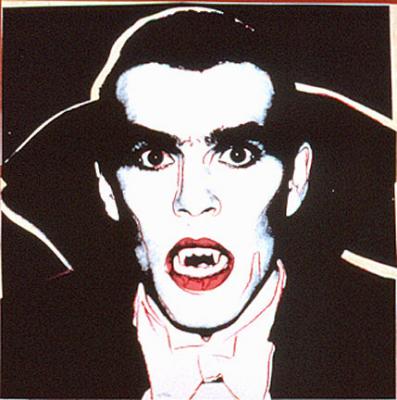
Instantly recognizable in his various incarnations, Count Dracula as imagined in the form of Bela Lugosi in 1931’s Dracula is the monster that launched a thousand reproductions. Bram Stoker’s Dracula has moved from “nineteenth century up-to-date with a vengeance” to the postmodern, with only the most essential elements of the novel maintained in the progression to its current state as a pop-cultural edifice and a potent contemporary mythology.
Central to this transition is the new life given to the novel in its various reimaginings within the appropriately technical, visual media of film. Looking at films as theoretical (rather than literal) interpretations of the novel, the shape-shifting abilities of Count Dracula are seen on a new level, one in which the vampire as conceived by Stoker is able to assume the form most ideal to feed upon modern audiences. What emerges from the novel’s various resurrections on film is a new mythology of Dracula, rendered through the creation of a new pictorial language as a means of expressing not only themes central to Stoker’s original, but the concerns of a new age to which the original has been adapted. As the number of reproductions increase, the culturally-constructed Dracula becomes further removed from its textual source, resulting in reproductions that are readings of those that came before, rather than of Stoker’s novel.
“Those Weird Sisters”: Dracula and Cinema as Relative Cultural Productions
Self-consciously modern in its utilization of the technological advances of the late nineteenth century, Dracula as a novel presents the illusion of disparate accounts linked together through phonograph recordings, typewritten accounts and newspaper reports among traditionally epistolary letters and diary entries. Had the novel been written only a few years later, at the dawn of the twentieth century, it may have referenced the burgeoning media of film—which was mainly documentary in its applications in the earliest days of its development—as an up-to-date method of recording what the various accounts are attempting to describe. Instead, seizing the dramatic possibilities present in the novel (and already apparent to Stoker as he arranged a dramatic reading of Dracula upon its publication), film would utilize the novel in the creation of popular cinema. The development of film coincides perfectly with the creation of the Dracula myth, suggesting that the timeliness of the novel’s publication would place it in the public consciousness only long enough for it to be briefly considered before numerous cinematic interpretations would precede it in the public imagination. Dracula was published the same year as public performances of filmed images in the cinema began in London, among them Lumière’s cinematograph L'Arrivée d'un train à La Ciotat (1895). The short film (surrounded with its own mythology of overwhelmed viewers responding with fear to their first cinematic experience, believing the train was heading towards them) emphasizes the self-conscious modernity of the new medium, which aimed to inspire wonderment in its ability to capture the familiar experience of modern life as though it were ostensibly preserving reality. In this, film proved that it was supremely “nineteenth century up-to-date with a vengeance”.
When film was applied to the production of fantasy, the strange semblance of reality inherent in the technology presented exciting new possibilities. Even before Thomas Edison’s early films adaptation of Frankenstein in 1910, George Miéliè’s Le Manoir de Diable, a two minute silent film regarded as the first vampire film, premiered to London audiences. Ronald R. Thomas estimates that Le Manoir de Diable had its London debut in 1896 or early 1897, placing it as a precisely contemporary work to Dracula, and notes the pertinence of the parallel births of the novel and cinema (notably horror cinema) in the public consciousness: “the cinema and Dracula are twin children of the same cultural forces: they arrive in London at the same time, each producing in the audience the same spellbinding effect under the cover of darkness”.
The modernity, the fantasy and the opportunity for dramatic visual spectacle present in the novel would lend itself to film, and the reproductions would soon overwhelm the original. The exact number of films based on Dracula is “ultimately incalculable since it is difficult to determine which of them qualify as actual adaptations of Stoker’s novel and which are more properly regarded as mere parodies, pastiches, or allusions to it”, but it’s clear that the reproductions of the novel on film are more numerous than those of any other literary work.
A simple search on the Internet Movie Database for “Dracula” returns well over 200 titles, including foreign made (but excluding adult film) titles. The effect of the proliferation of reproductions on the reading of the novel is clear when the films are viewed in comparison to the novel, for the majority resemble the original only in fragments, and the character of Count Dracula is often presented as a mosaic of associations informed by encounters with previous adaptations. The films have become dependent on each other more than the novel, and the Count has become a pop-cultural symbol utilized in the public imagination for his ability to adapt to a broad number of associations both present in Stoker’s work and created through the modern media productions.
|