In much gothic and vampire related literature there is an underlining constant of the paranormal. What I want to discuss is how that helps us reflex on ourselves in this day and age.
Looking through history it has been a constant that we as individuals use art as a means to “know thyself”. The Greek culture did this through plays, tragedies where the audience was able to see the “down fall” and through the advice of the chorus make choices other than what were made by the tragic character. Oedipus is a prime example of this, as is Thyestes with her feeding her children to her husband. Used as commentary on the masses for the political we see a change in the literature of Shakespeare which uses the paranormal ghosts as a conscious of sorts to warn. It is with Shakespeare that the lower forms of society are really approached as being “people” apposed to pawns.
By the time of Mary Shelly we see Frankenstein as the dangers of science; how it can do something that is itself beautiful (life), contrasted with the horror of using the remains of the dead town’s people, to create the birth of the monstrosity.
So using the quote above from Buffy the Vampire Slayer, how do you approach fiction to assist you in your own self discovery? What parts of paranormal occurrences do you find to be more “super-normal” and just part of who and what we are, as the unlikely life forms that we are? Do you see a direction in this path, and if you do find it rare, why is that- when it seems that so many people have the same potentials?
Note to those that think this is interesting: So do I, but do not post unless you wish to add to the conversation.
For me I will make use of any media that suits my interests.
So i get inspired by something I see from the television, just as easily as something I read in a book written in ancient languages. The buffy universe, as well as the White Wolf series' and many other modern books have been able to catch my interest, and point me in the direction of gaining new tricks.
Its easy to thumb through a D&D book and find lists of spells, with their "components" and then get ideas to figure out how to actually do some of the similar stuff.
It doesn't matter if the source is from a fantasy book or not. So long as its all approached in the same way. Does it have a method? What is the method? What are the aspects that are required to be an operational system? What holes need to be filled in? Does the system fit the mechanism of the Spellcraft? Do all components reflect and draw in the same currents? How long does it take? How long will it take? What extra things do I need in order to get it to work for me? Will it be useful?
are just some of the listing of questions that must be able to be answered by observing the "fictional" piece on hand. Because its all a matter if you can put the symbolism into a personal cosmological construct where its efficacy is ensured. You could even use the Harry potter books as a hand book to splitting off the aspects of the soul and containing the fragments within various pieces scattered about, thusly creating a temporary reprieve from mortal death.
So it all depends. So long as there is an idea of what is possible, then you have the means to make it flow in the direction manifestation.
What interests me about this is that we all will take different things from what we read. It can be as simple as how D&D has you view the idea of magic, or as complex as the mathematical equations that are used in physics.
Still for me, while much of it can not be fully explained by science or our understanding of the world, I view it as completely normal. One of the early books that had me viewing the world with a different perspective; was Interview with A Vampire. While I can't express how it altered my perception, I do remember it altered how I even looked a sunrise. Perhaps it was the expressive metaphors Anne Rice used, or maybe it was that as a thirteen year old I had not been exposed to such a vivid story... either way the imagery in that book has always reminded me of what seeing something for the first time is like: wonder and awe.
I too draw inspiration from all different types of media. Although not so much from television as I don't turn on the one eyed monster but maybe once a month, and then only to watch Discovery Health :p. Mostly I read, and I read, and I read...I read a lot. My favorite genre is historical fiction. It's also the reason I enjoy Anne Rice. Her stories contain accurate background and the imagery is, like you said Sah, VIVID.
I also spend the later part of summer devoted to the Pennsylvania Ren Faire. I'm a patron, but a season pass holder who prides herself in making her own costumes. I've made friends with some of the shop keepers and get recognized by the actors...I'm a Rennie.
But with every book I read it expands how I view the world. It expands my view of the world. It changes the way I write.
When I write it expresses my feelings at the moment. It reminds me of where I am in life. My writings also leave me a history of where I've come from.
I read alot. I usually just read about vampires like Ann Rice and Stephine Meyers. It relaxes me more than anything. When I read I go into my own "little" world were I feel normal. I like to be surronded with paranormal things because I feel more at home there than I do in what society says "real" life.
I can express myself through the books I read and then through people who have read the same books or who actully believe in the things I do and this is why I joined this site as well.
i read lot of "speculative fiction" its a form of science fiction that speculates on posibilities, of alternative cultures and ideas. many great philosophers and idealist of our times have chosen to use speculative fction to express themselves. in a sense fantasy fiction is the modern parable. on a very simple and basic level, Star rek showed us all that just because a culture is different, does not mean it is bad, and that a black female person could be accepted as a high ranking officer on a starship.
From most fiction I find there are always, in some form of the supernatural, a half-truth. As in, what they discuss isn't fully real, but not fully false too.
It has helped me learn of many things, as well as helped motivate me to learn more about the paranormal.
I agree on your reference to the Anne Rice book, I never looked at sunset the same way again either. It was another way to look at my world and perhaps find some beauty where I had not seen it before. To find a place where I could be strong, even if it was just part of the book or some movie. Within us all there is that strength, that strong part that just needs a gentle nudge.For me it is literature.
Well my meek opinion is simply that fiction reflects the current mode of thought. How we think, how we see the world, especially on a spiritual level. I think it shows how we are developing as human beings on an intellectual level.
I also think that fiction reflects the current state of mind of the general population. I have always noticed that disaster movies go in cycles as well. A few years ago it was destructive meteors like the one that killed off the dinosaurs... then it was earthquakes or natural disasters set off by the damaged environment... to now it is dying suns and starting off world communities.
It all reflects our state of mind and possibly a new way of thinking about things as well.
Fiction can be a good reflection of the human mind. It can also be a decent look into the future if the author is well educated in the fields he/she is embellishing upon. H. G. Wells is probably a good example of the former.
He was using tanks, chemical weapons, nuclear power and many other things in his writings before they even existed. However, he was a science buff so that helped inspire his writings. A lot of his works were essentially a social commentary on who we are and where we are going.
I think this shows that a good fictional read can be very enlightening if chosen correctly. Hindsight is always 20/20 though. Some will be seen as prophecies of the future and other will just remain a good story.
There is usually some underlying moral issue that can be looked at differently from even the most far fetched idea. It could be very inspirational or downright terrifying. I suppose it all about the interpretation.
Personally, I prefer to just look at fiction as fun. If I gain some new insight or inspiration from it then I just consider that to be a bonus. I don't really search out the "aha moment." If it happens, it happens.
So much shaped my thoughts and beliefs from novels and movies as I grew up. Some parts of each just stuck with me. Green Darkness by Anya Seton is incredible insight about reincarnation and other novels from H. G. Wells, Jules Verne, through Anne Rice have always helped to shape ideas, thoughts, beliefs to go along with real research.
First off, good job putting that quote up there. I love Buffy and so it drew me in immediately. Now to answer the question(s). For me fiction has made me realize a lot of things. In most fiction there is some lesson behind it that may help in life. Kids stories are full of that stuff. So why wouldn't adult literature be the same? THere are things in books that make you look at things differently than you normally would. Sadly, it seems less and less of the younger generations are reading unless they are forced to. I love to read. I have learned a lot even from fiction I have read.
There are some excellent points that people have made, Jack, I agree- although while fun... who says fun means we don't learn? I would have to say, when I teach people learn more and with more ease when they have fun.
Look at fair tales. The red shoes by Hans Christian Anderson: girl wants pretty red shoes, lies and is forced to dance till her feet are chopped off.
Most of them are a "moral" lesson geared to help/hinder an individual's growth to what the author views as appropriate. How do we take the lesson out of the story?
These are just some of the thoughts that fiction often inspires in myself... please continue to share yours :)
I read a lot of Science Fiction and Fantasy when I was younger and it created an understanding that what seemed impossible quite likely could be possible.
I developed an understanding that there are many points of view. That faith and belief can be as strong a motivator as fact and truth.
You can get lessons from any story, no matter the subject matter or how fantastical it may be. All you have to do is create a backward metaphor.
I think fiction helps people to be more broad minded and think about things
I'll go with Sinora. What I've read & seen, gave me an awareness of "something else".. ehich led to study .. and awareness of self and potential.
Without the fiction, those changes may have occured, but they certainly helped.
Let's here more specifics, what types of "backwards" metaphors have you created Lagniappe?
In what instances has fiction created an "aHa!" moment?
Discuss the in's and out's of the metaphor because it is easy to just say, "Yes I think it does" it is the specifics that will draw us into other artists, and ways of looking at things.
Our world is so sterile, if one wants to look at a 2001 A Space Odyssey, then you can see that world created not as a metaphor but as the reality. Where is the blur? We are neither here nor there...
Perhaps this is why a movie such as the Matrix was so brilliant- it showed us that there are more levels than even the 3 we constantly live in. How many of us go from being one, to two to three dimensional everyday? We do it and do not think about it- we merely accept.
I do not want to accept, I want to examine.
Some examples are in history of fiction providing guidelines for reality to change are Jules Verne novels. Descriptions of traveling to the moon and undersea that ended up becoming reality.
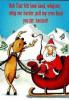
Sahahria, The Matrix certainly causes us to question the nature or our existance, but how about the fiction that has created its own existance. Like the current picture of Santa Clause, based on an ad for Cocacola and the current concept of Santa's sleigh landing on the roof, based on a poem. These items created a who new reality that exists in decorations and people who dress up as Santa. People even tell their young children that santa exists.
Makes you wonder what other belief systems that we hold dear are based on.
"I think therefore I am"
Yet still when I do not think, I still am. Never to I not become me.
That is exactly what I'm looking for with this topic- how do we use metaphor in our day to day lifes. Plenty of people take metaphor into art, but when is life itself part of the illusion?
There are deeper ways of looking at things, even my additions to this are falible. The point to examine is where do we fall into this, and then where does the intellect hinder life?
What sort of balance do we create with fantasy and real to discover our truth... and when does that line blurr and hinder our growth?
Aside from santa, Rudolph the Red Nose Raindeer- has his first appearence in our culture at a Macy's parade... hows that for the role of media in our subconscious?
Fiction takes us as individuals to places that we normally would think about. It helps create our imagination, and creativity with our daily doings. Also how we interact with each other
Walker Percy wrote extensively on metaphor. He also said (in Lost in the Cosmos), that "writers are in the front line of sensibility, like the canaries miners take down in the shafts to test the air." He went on to discuss art, and differences between writers and artists saying artists use "concrete intermediaries, clay, paint, models, fruit, landscape, etc. This is why writers drink more and painters live longer."
One is at least starting with objects that exist in the world. Once the object is on canvas, it is no longer the object, but you can still (usually) name it. While the other (in using metaphor to describe the object) removes it even further from the original experience.
May not make it less valid or enlightening for the individual reader, but it does leave it subject to wide interpretation.
Sahahria, I have always thought of vampires as paralleling humanity... so instead of them literally draining blood... I think of the reality draining we do as people. I think of how bad we want certain things in life, only to get it and not be satisfied.
we express our selfs in everything we create or believe that is a fact of human nature.
Interesting point eternally longing for the one that got away, still what about getting exactly what you want... only to find it is fundamentally flawed. Still you can't unbind yourself from it. Thus the idea of eternity in pain.
How else do people take the myth, and lore to make it something they have used?
"What interests me about this is that we all will take different things from what we read. It can be as simple as how D&D has you view the idea of magic, or as complex as the mathematical equations that are used in physics."
That is because we have all had different experiences growing up, living life. Our past experiences shape us into what we are today and how we view the world, and react to it.
Jamie that is a great point our past influences how we look at both our life now, and how what we read is interpreted.
Do you think that using fiction as a tool is a help or a hindrance to people moving forward? I have seen it happen where people read fiction and then try to interpret things in their current life to that of what they read. At times I have seen it help, other times I have seen people get lost in the pretend.
When is too much metaphor a hindrance?
sahahria brought out some aspect of my response in an earlier post.
It was my introduction to AD&D when I was younger. Up until age 10, I was and only child, and that in itself allowed me to develop a very active immagination due to my relative isolation.
The immagination added to the rules and realms of D&D placed a super-turbo-charger on my immagination. I soon actually become interested in expanding my thought through reading fantasy novels.
Oddly enough, I really never enjoyed the novels as much as I enjoyed playing the game and extracting the fantastic from my own mind...
When is too much metaphor a hindrance?
I love this question.
It's a hindrance when it removes you from a primary experience.
Two things come to mind. First: "Everything that was directly lived has receded into a representation." Guy Debord
Second: In Romero's latest zombie film, the filmmaker is literally a character in the movie, so entrenched with living behind/through a camera lens that he is devoured by it/zombie.
Lagniappe, the vampire/human metaphor works a little differently for me. don't think vampires get what they want, and then are disatisfied.
Rather, they never get what they want, which is the spark, the essence of human life. They are always thirsty, always longing, never satisfied, eternally postponing gratification.
In this sense, the human desire for an afterlife, for heaven, leads some to pursue spiritual metaphors in the supernatural, and postpone, miscontrue, or avoid gratification in the here and now.
i have heard it said that vampires in fiction - well modern fiction anyway - are an alegory for the Mafia. they regard their coteries as a family-like clan, they have strict heirachy, they prey on the innocent, and they war with each other, and they exist outside the law, and are apart from normal society. they are also powerful, manipulative, and held in awe and fear. the only real diffrence is whilst vampires shun garlic, the Mafia are pretty much addicted to the stuff.
A lot of what we want when we get it we don't want it anymore. We were all kids once the toy everybody wanted one day was different the next. You always want what you can not have that is also life because if you had everything you wanted what would be your goal in life it would be pointless. Having nothing to strive for and nothing to achive leaves your life with out meaning.
I always liked reading and watching fiction just as entertainment, it never affected me in real life, I always saw it as just entertainment and even though the subject of the supernatural, like ghosts and occult were my interest, and even fantasised to be a mytical creature just for the fun of it. I was still a bit skeptic though, like I said before it was all fiction and entertainment to me, until I had my own expiriences, and only when I had my own expiriences, it had an effect on me.
fiction does really teach people a lot more people are going to pay attention to fiction then someone saying this is how it should be and this is how it is. Like Frankenstiens monster is a lesson on how not to judge people on their appearance and that there is good in everyone but no one would listen to that if you just told them but a freaky story is going to make you feel for the monster.
Thanks for pointing me in this direction. ;)
I read the original post and skipped through the responses, so I apologize if I say something that re-iterates or otherwise bores or annoys. I wanted to first post my gut-reaction to the questions posed.
The best sort of fiction is the sort that takes the ordinary and blows it up into wild fractal proportions of itself, then takes you by the hand and drags you head-long through a path whose scenery is at once familiar and alien, and whose clearing at the end of the path is either a revelation about yourself, those around you, the state of the world, or something else that otherwise leaves you the better for having stumbled there.
I think the best example personally would have been when I read The Gunslinger for the first time when I was eight. Towards the end of the book, Roland has quite the mystical experience with the man in black, in which multiple worlds and dimensions and worlds within worlds are discussed and, at the very end, discovered. I think that was the start of me really questioning the nature of existence and all that goes with it, normal and paranormal. What sort of "normal" reality allows for the existence of the "paranormal"? When one thinks of "normal" reality, it's almost a given that in this "normal" reality, there are no paranormal experiences, only coincidences and tricks. Yet, if we do believe in the paranormal, then this "normal" reality does not, in fact, exist; there is no difference between normal and paranormal, because it's ALL normal, or at least natural.
Yikes, I'm rambling now. I should stop that.
That's a great point Arunima... although I would then want to ask, when is it our perception of normal that hinders our growth?
Or how does what we know prevent us from understanding what is?
We can look at the truth in fiction and just dismiss it because it is a story, or we can claim that and learn from it. Still with those options, what allows us to choose which direction we will take?
Reading the posts after mine, I have to agree fiction can teach us, example children's tales have always a lesson in them.
What sort of "normal" reality allows for the existence of the "paranormal"?
I think by what is decided by the majority and the majority is society.
when is it our perception of normal that hinders our growth?
Or how does what we know prevent us from understanding what is?
Still with those options, what allows us to choose which direction we will take?
I think it'd be the way we are taught, yet there are still those who don't follow everything they get taught and want to expirience themselves...